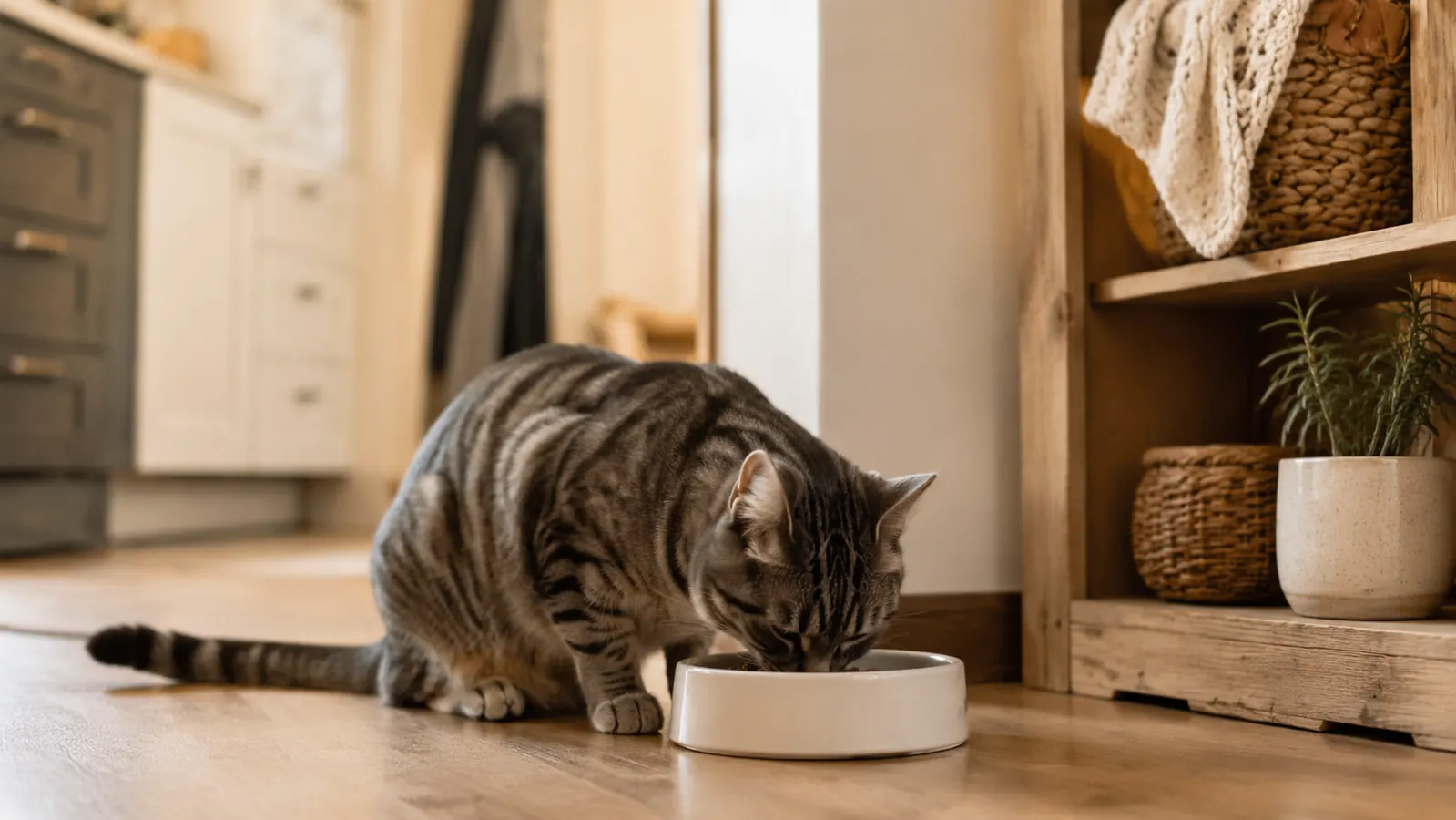
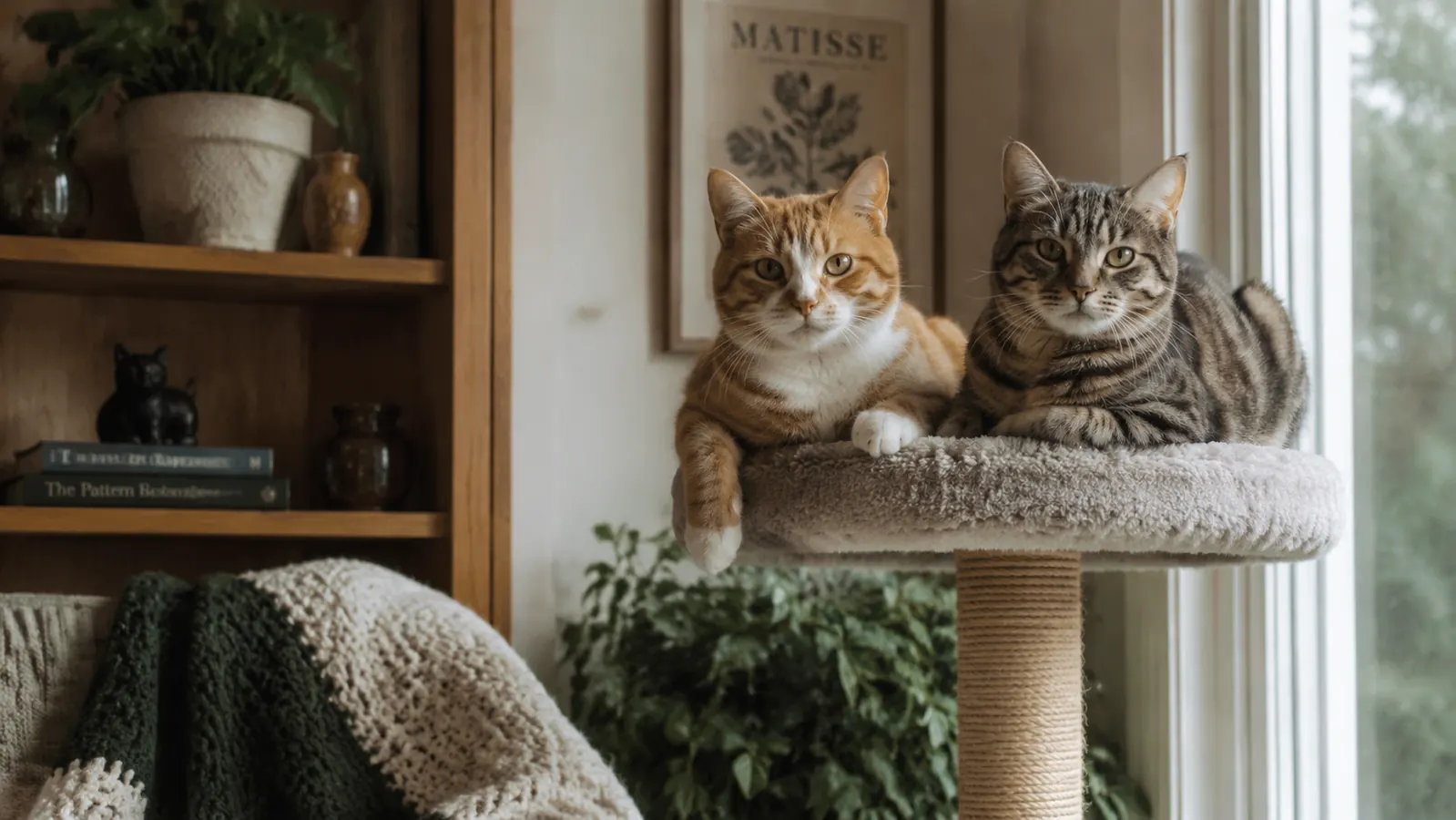
Two years ago Marigold, my 9-year-old gray tabby, started turning her nose up at the mid-range dry food she had eaten without complaint for three years. Half the bowl left untouched, morning after morning. Pip, my 4-year-old orange tuxedo, was still eating fine, but his coat had gotten dull and slightly greasy-feeling despite regular brushing. My vet's first question was always the same one: what are you feeding them? I had been dodging that question for a while. After a longer-than-I-want-to-admit research spiral, I landed on Purina Pro Plan Complete Essentials Chicken and Rice, the 16-pound dry bag. I figured I would give it three months and see. That was 24 months ago. This is everything I actually noticed.
I want to be upfront: this is not a sponsored post and nobody sent me this bag. I bought it, I kept buying it, and I am writing about it because it genuinely changed what I see in my cats day-to-day. That said, I will also tell you the two things I do not love about it, because a review that is all positives is not worth reading.
Quick Verdict
A high-protein, probiotic-fortified dry food that made a real, visible difference in coat quality and digestion for both my picky senior tabby and my younger tuxedo cat. The price per pound is fair for the quality, though the bag opens awkwardly and the kibble size may not suit every cat.
Amazon Check Current Price on Amazon →If your cat is leaving half the bowl or their coat has gone flat, this is the bag I would try first.
Purina Pro Plan Complete Essentials Chicken and Rice comes in a 16lb bag. It has been in continuous production for years, meaning the formula does not quietly change on you. Check the current price below.
Amazon Check Today's Price on Amazon →How I Have Used It Over Two Years
I feed Marigold and Pip twice a day, morning and evening. Marigold gets about a third cup per meal because she is a grazier who will overeat if I free-feed, while Pip gets a slightly more generous pour since he burns more energy. Both transitioned onto Pro Plan over ten days using the standard 75/25, 50/50, 25/75, then full-swap approach. Pip adjusted without any digestive drama. Marigold had two days of loose stools around day six, which resolved on its own. After that, both cats have been on nothing but this formula.
I store the bag in a resealing pet food container I made from a vintage tin I found at a thrift store. Keeping the kibble away from air matters more than most people realize. The Pro Plan bag itself has a fold-over top, not a zip seal, which is my main packaging complaint. Over 24 months I have gone through roughly 16 bags, so I have had enough time to notice when a bag smells slightly off at opening versus when it smells clean and chickeny the way it should.
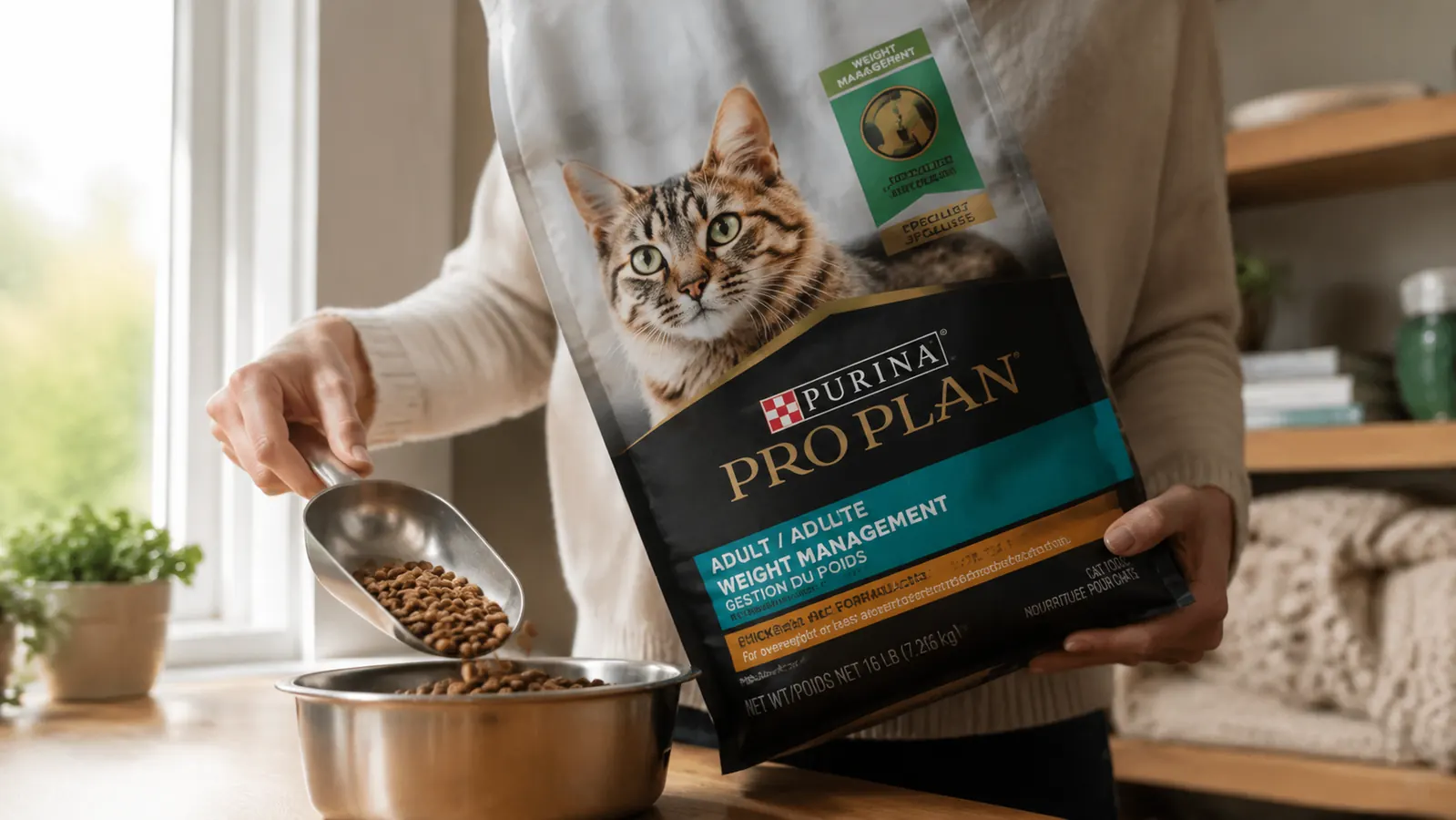
I supplement both cats with a small amount of canned food at dinner, about two tablespoons each, mainly to keep their water intake up. The dry food is the nutritional backbone of the diet. That context matters for this review, since I cannot claim the Pro Plan alone deserves all the credit for their condition.
What the Ingredient List Actually Says
Chicken is the first ingredient, followed by rice, then corn gluten meal. Some cat food critics will stop at corn gluten meal and call it a dealbreaker. I spent time looking at this more carefully. Corn gluten meal is a protein-dense plant ingredient, not filler corn. Its digestibility in cats is reasonably well-documented. It is not ideal compared to a second named meat source, and if I could wave a wand I would prefer chicken meal second. But in the context of the full formula and what I actually see in my cats, I have made peace with it.
The feature I care about most is the live probiotic cultures listed on the label, specifically Lactobacillus acidophilus. Most dry cat foods have no live probiotics at all, because the extrusion heat during manufacturing kills them. Purina applies the probiotic coating after extrusion, which is why their claim of live cultures at the time of consumption is meaningful. Marigold had a history of occasional soft stools before this food. That issue essentially stopped within the first month on Pro Plan. I cannot prove the probiotic is solely responsible, but the timing is hard to ignore.
Crude protein sits at 40 percent minimum. For context, a typical mid-range dry food often lands in the 26 to 32 percent range. Cats are obligate carnivores and perform best on high-protein diets, so that number matters. Crude fat is 17 percent minimum, crude fiber is 3 percent maximum. Those numbers line up with what most feline nutrition resources cite as a good dry food target.
Marigold had been leaving half her bowl for three months straight. On day four of Pro Plan, she cleaned it completely and sat next to the empty bowl looking at me. That had not happened in a year.
The Changes I Noticed Over Time
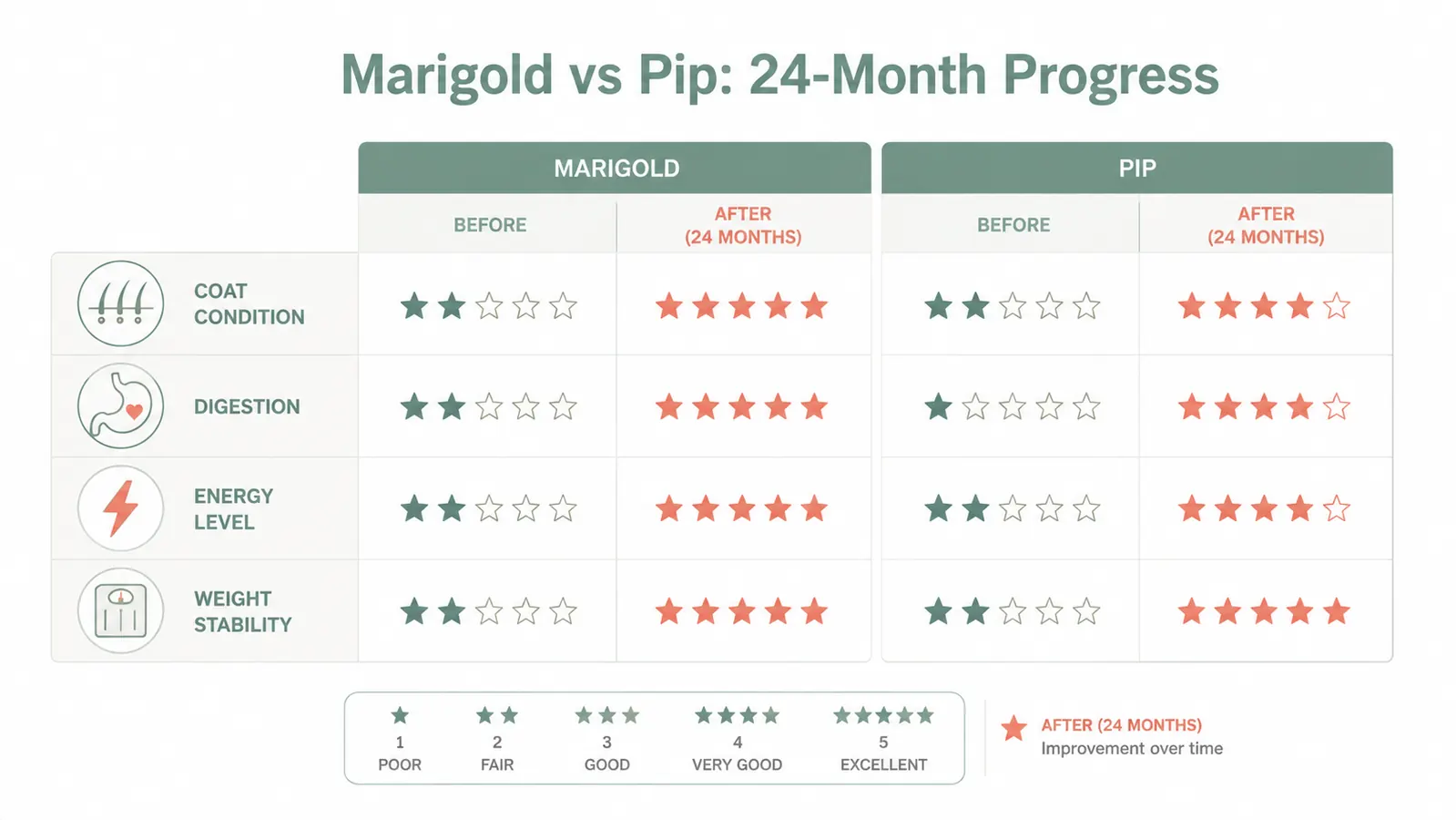
By month two, Marigold's bowl-leaving had stopped. She was not inhaling her food either, which would worry me. She was eating at a normal pace and finishing. By month three, Pip's coat had shifted noticeably. The greasy, flat feeling along his back was gone. His coat under my hand felt clean and slightly dense in a way it had not before. I assumed grooming habits or seasonal change at first, but the coat quality has held consistently through two winters and two summers now.
Marigold's weight has stayed at 9.4 pounds through all 24 months. That is exactly where her vet wants her. Pip is at 11.2 pounds, also stable. For two cats whose weights had crept up slightly on their previous food, that stability over two years is meaningful to me. I did not change their portion sizes significantly when I switched. The higher protein density seems to keep them satiated without overeating.
Digestion, as evidenced by litter box output, has been notably more consistent. Stools are well-formed, odor is present but not overwhelming, and frequency has been regular. This is not glamorous to write about, but it is genuinely the fastest feedback loop you have on how well a cat food is working. Good digestion on Pro Plan has been the norm for both cats across two years, with only occasional exceptions during stressful periods like vet visits or a week when Pip decided to eat a spider.
Alternatives I Tried Before Landing Here
Before Pro Plan, I went through a phase of trying grain-free premium foods. I was convinced grain-free was the right call for a while. Then the FDA investigation into grain-free diets and dilated cardiomyopathy gave me pause, and Marigold's vet was direct about her skepticism of grain-free for a cat without a specific grain sensitivity. I moved away from that category and have not looked back. The corn in Pro Plan, framed correctly, is actually less of a problem to me now than the legume-heavy formulas I was feeding before.
I also tried two boutique brands that cost significantly more per pound. Both had better second ingredients than Pro Plan. Neither produced better visible results in my cats. This is the uncomfortable reality of premium pet food marketing: the ingredient panel and the actual outcome for your specific cat are not always correlated the way the bag copy implies. Pro Plan, backed by Purina's research budget and decades of veterinary feeding trials, outperformed both boutique options in what I could actually observe.
If you are comparing Pro Plan directly against Hills Science Diet, which is the other vet-recommended formula you will hear constantly, I cover that head-to-head in detail in my Purina Pro Plan vs Hills Science Diet comparison. The short version: both are solid, but I give Pro Plan the edge on protein content and palatability in my household.
What I Would Change About This Food
The bag closure is genuinely annoying. A fold-over cardboard top on a 16-pound bag, with no zip seal, means you are relying on a clip or transferring the food to a separate container after every opening. For a food at this price point, a zip seal should be standard. I have never bought a bag that smelled rancid, but I transfer to a tin container immediately because I do not trust an unsealed paper bag over two to four weeks.
The kibble size is medium-large, which works perfectly for Pip. Marigold, who has always been a dainty eater with slightly small teeth for her head, took a few weeks longer to get comfortable with the size. She adapted, but if you have a small-mouthed cat or a kitten, you may want to check the kibble dimensions before committing to the 16-pound bag. I wish Purina offered a uniform size option across formats.
Pros
- 40 percent minimum crude protein, meaningfully above most mid-range dry foods
- Live probiotic cultures applied post-extrusion, which is a real and uncommon feature
- Palatability has been consistent across two very different cats over two years
- Weight stability for both cats without changing portion sizes
- Backed by decades of Purina feeding trial data and regular veterinary recommendation
- Available in large bags and on Subscribe and Save for lower cost per pound
Cons
- No resealable closure on the bag; you need a separate storage container
- Corn gluten meal as third ingredient will be a dealbreaker for some cat parents
- Kibble size skews medium-large, which may not suit small-mouthed or senior cats with dental issues
Who This Is For
Pro Plan Complete Essentials Chicken and Rice is the food I recommend to any cat parent who is looking for a well-researched, high-protein dry food that most cats will actually eat. It is especially worth trying if your cat has a history of inconsistent digestion, a dull or greasy coat, or unpredictable appetite. It is also the food I point people to when they are coming off a grain-free diet and want something with a solid track record and veterinary support behind it. The 16-pound bag makes the price per pound competitive, and the Subscribe and Save option brings it down further. Check current protein content numbers in my guide to high-protein cat food benefits if you want more context on why the 40 percent number matters for indoor cats.
Who Should Skip It
If your cat has a confirmed chicken sensitivity or allergy, this formula is not for you since chicken is the first protein source. Cats with grain sensitivities diagnosed by a vet should also look elsewhere, as rice and corn gluten meal are both present. If you have a senior cat with significant dental problems or tooth loss, the kibble size may be too large and uncomfortable. And if you are philosophically committed to a grain-free, legume-free, or raw-adjacent diet for your cat, Pro Plan will not check your boxes regardless of what I observed in my own household. For everyone else, I would say it is worth at least a trial bag.
Two years in, I am still buying this bag every month. Here is where to check the current price.
Purina Pro Plan Complete Essentials Chicken and Rice, 16lb dry bag. This is the exact ASIN I have been ordering since 2024. Subscribe and Save knocks an additional percentage off if you are ready to commit.
Amazon Check Today's Price on Amazon →