If you have spent more than five minutes on cat food forums, you have seen this debate a hundred times: Purina Pro Plan versus Hills Science Diet. Both get the vet thumbs-up. Both show up in every pet store. Both cost more than the generic bag by the register. So which one is actually better for your cat? I switched Marigold, my 9-year-old gray tabby, and Pip, my 4-year-old orange tuxedo, between these two formulas over the course of about four months to see for myself. Here is the honest answer.
Short answer: Purina Pro Plan wins for most cats, and the ingredient panel explains why. But Hill's Science Diet is not a bad food, and there are specific situations where it makes sense. I will break all of it down below.
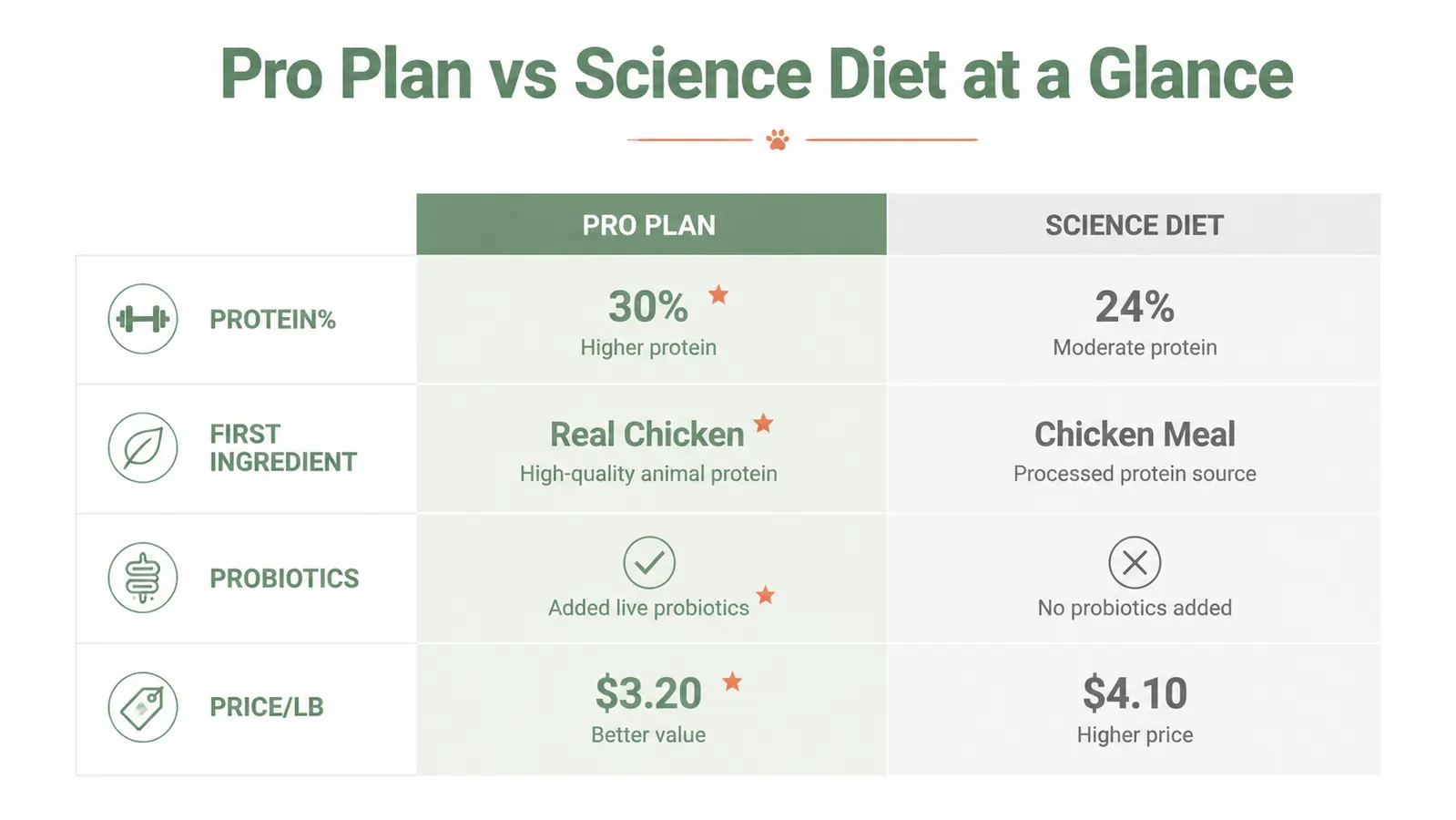
| Feature | Purina Pro Plan | Hills Science Diet Cat Food |
|---|---|---|
| First Ingredient | Chicken | Chicken |
| Crude Protein (dry matter) | 45%+ | ~35% |
| Added Probiotics | Yes (Lactobacillus) | No |
| Grain-free Option | No (rice-based) | No (corn/wheat base) |
| Price Per Pound (approx.) | ~$3.35 (16 lb bag) | ~$4.50 (15.5 lb bag) |
| Amazon Rating | 4.8 / 5 (3,200+ reviews) | 4.7 / 5 (est.) |
| vet WSAVA alignment | Yes | Yes |
| Palatability (my cats) | Strong preference | Accepted, not excited |
Where Purina Pro Plan Wins
The protein gap is the most important difference between these two foods. Purina Pro Plan Chicken and Rice runs over 45% crude protein on a dry matter basis. Hills Science Diet Adult Chicken Recipe clocks in somewhere in the 34 to 36 percent range depending on which formulation you buy. Cats are obligate carnivores. Their bodies are literally designed to run on high dietary protein, and the difference between 35% and 45% is not trivial over the course of years. Marigold's coat noticeably improved after about six weeks on Pro Plan consistently. Less shedding during brushing, less dander on the gray craft-room chair she has claimed as hers.
Pro Plan also includes live probiotic cultures (specifically Lactobacillus acidophilus) baked right into the kibble. Hill's standard chicken formula does not. For older cats or cats who have ever had digestive sensitivity, that distinction matters. Marigold went through a rocky stretch after a dental cleaning last spring, and keeping her gut microbiome supported was not something I wanted to leave to chance. The fact that Pro Plan handles that without an added supplement is a real convenience.
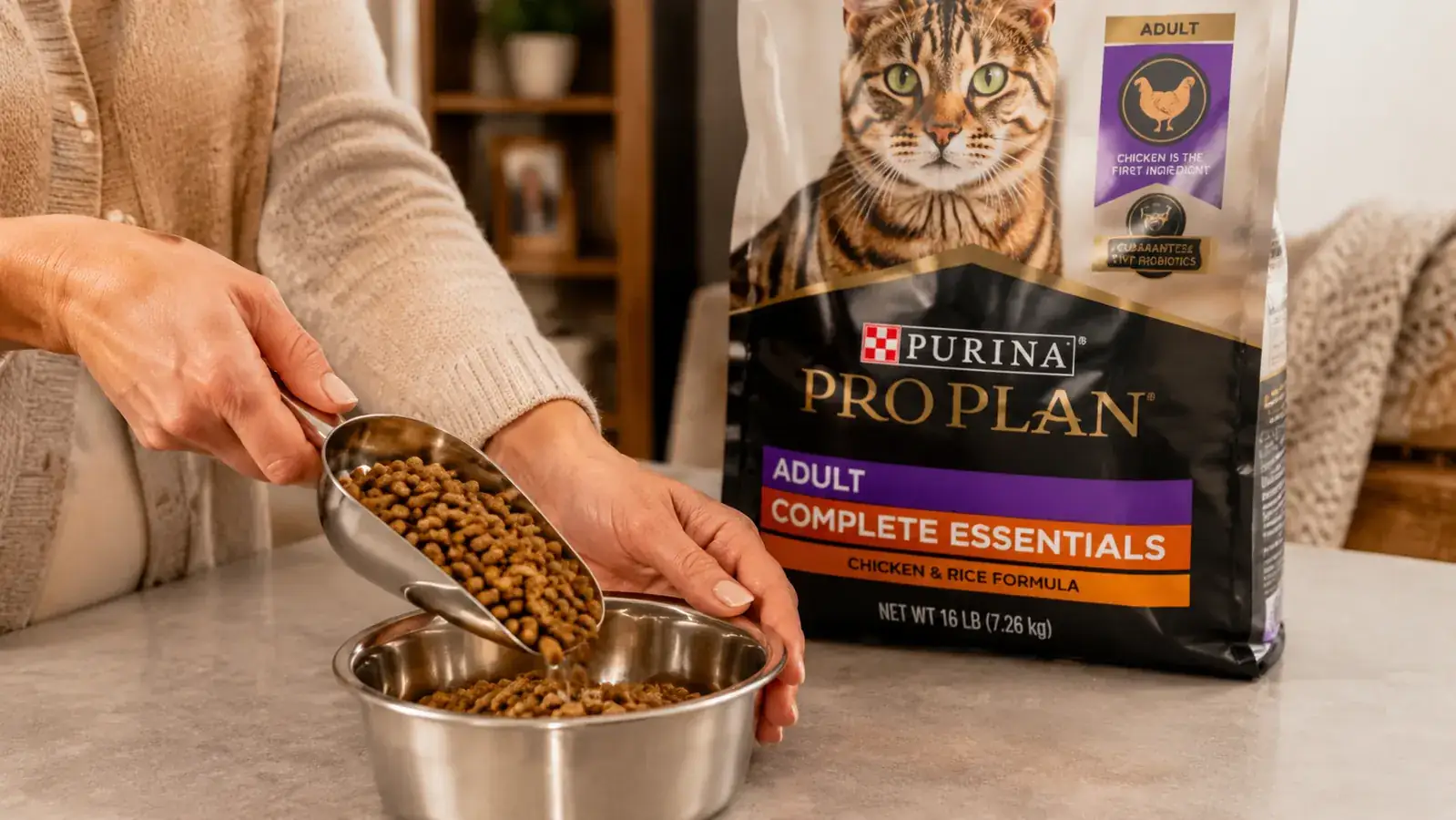
After about six weeks on Pro Plan, Marigold's coat looked noticeably better. Less shedding during brushing, less dander on the chair she's claimed as hers.
The Price Question: Pro Plan Is Actually Cheaper
This surprised me too. When you compare the large bags, Purina Pro Plan often comes in cheaper per pound than Hills Science Diet, especially when you factor in Amazon Subscribe and Save pricing on the 16-pound bag. Hill's tends to command a slight premium, partly on brand equity from decades of vet clinic shelf presence. But premium pricing does not automatically mean better nutrition. In this case, you are paying less for a higher-protein formula with probiotics included. That math is hard to argue with.
Pip goes through food faster than Marigold does, partly because he is younger and heavier, and the cost difference across a full year adds up to real money. I tracked it over three months and came out ahead staying with Pro Plan, not behind.
Your cats are eating something today. Make sure it's this.
Purina Pro Plan High Protein Chicken and Rice is the 16-pound bag I keep stocked for Marigold and Pip. Over 3,200 reviews, 4.8 stars, and a protein panel that actually matches what cats need.
Amazon Check Today's Price on Amazon →Where Hills Science Diet Wins
Hill's earns real credit in the prescription and therapeutic formulas category. Their c/d Urinary and k/d Kidney formulas are the go-to options from many veterinary internists, and they have decades of clinical data behind them. If your cat is on a prescription Hills diet, that is a different conversation than the over-the-counter chicken recipe I am comparing here, and you should follow your vet's guidance without substituting.
The standard Hill's Science Diet Adult Chicken Recipe is also a reasonable food. It meets AAFCO standards, it is not full of fillers or by-product meals, and some cats genuinely prefer the taste. Pip, who will eat basically anything including the cardboard that cat toys ship in, ate Hill's without complaint. Marigold, who has strong opinions about texture and will boycott food she doesn't like for up to 14 hours, ate it but lacked the enthusiasm she brings to Pro Plan. Palatability is real, especially for picky eaters.
Ingredient Quality: Looking Past the First Ingredient
Both foods list chicken as the first ingredient. That is good. But the ingredient list diverges pretty quickly after that. Hill's Science Diet Adult Chicken uses corn as the second ingredient in some formulations. Corn is not poison, but it is a less digestible carbohydrate source for cats compared to the rice and barley Pro Plan uses. Cats lack the salivary amylase enzyme that helps break down starches efficiently, so the quality of the carbohydrate carrier does matter at the margins. Pro Plan's formula leans on rice, which is gentler on digestion and has a better track record in cats with food sensitivities.
Both brands are WSAVA-aligned, meaning they have dedicated nutrition research staff, employ board-certified veterinary nutritionists, and conduct feeding trials rather than just relying on formulation software. That is a meaningful bar that knocks out a lot of boutique brands. If you have been eyeing grain-free or novel-protein brands that don't meet that standard, both of these foods are more rigorously validated than most of what lines the boutique pet store shelves.
Real-Cat Palatability: What Marigold and Pip Voted
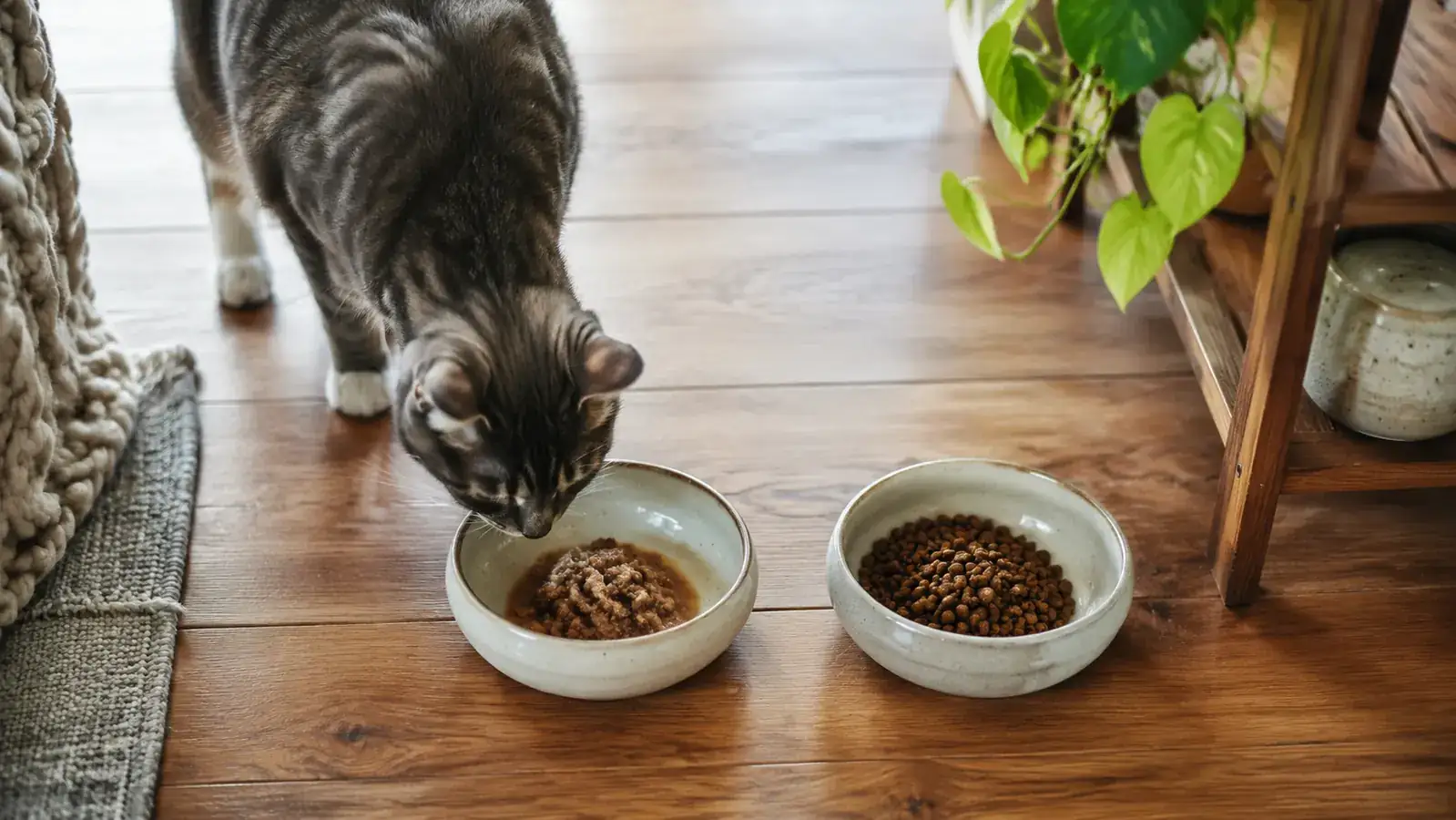
I ran an informal side-by-side test for about two weeks: two identical bowls, both clean, placed about 18 inches apart. One had Pro Plan, one had Hills Science Diet Adult. I varied which side each food was on day to day to rule out bowl-position preference. Marigold went to Pro Plan first on 11 out of 14 days. Pip chose Pro Plan first on 9 out of 14 days. That is not a controlled double-blind study, but it is also not nothing. Cats are not brand-loyal. They follow scent and palatability, and the results were consistent.
One thing worth noting: palatability tests like this are most meaningful for cats who are healthy and not on any restrictive diet. If your cat is on a prescription food or has a diagnosed condition, talk to your vet before switching or running any kind of food experiment.
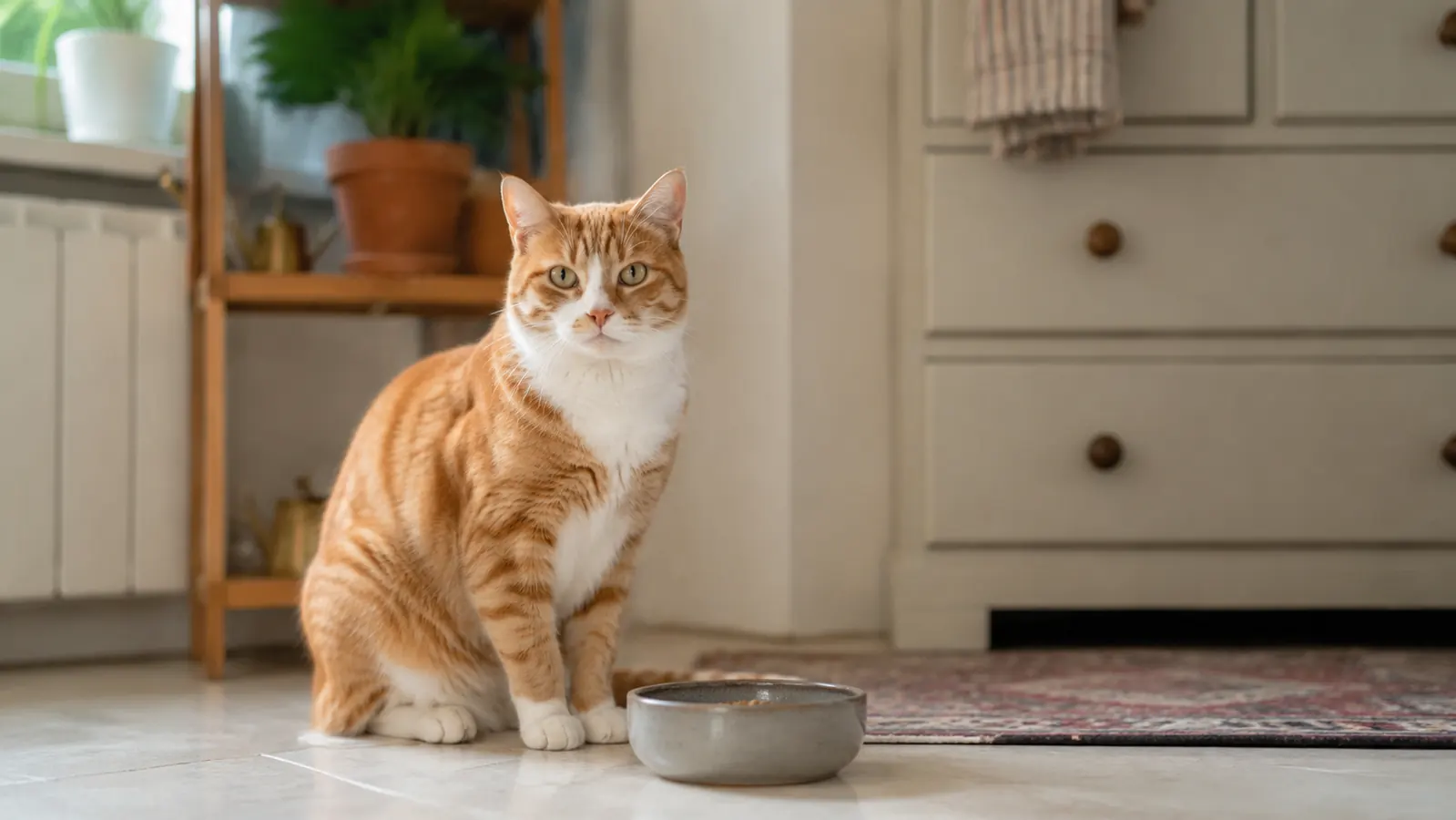
Who Should Buy Which
Buy Purina Pro Plan if you are feeding a healthy adult cat or a multi-cat household and you want the best overall combination of protein content, probiotic support, and price per pound. It is especially strong for active cats, cats with a history of minor digestive sensitivity, and older cats who need help maintaining lean muscle mass. Marigold is nine years old and I want her holding on to muscle as she ages. Pro Plan is the right call for that.
Stick with Hill's Science Diet if your vet has specifically recommended it, particularly for a prescription formulation (c/d, k/d, z/d, etc.). The therapeutic lines are well-researched and worth following if your cat has a diagnosed condition that requires them. For general healthy-cat feeding on the standard OTC formula, the protein and probiotic advantages of Pro Plan are hard to give up.
If you want a deeper look at how Pro Plan holds up over two full years of daily feeding, I wrote that up in my long-term review. And if you are specifically curious about what the ingredient label is not telling you up front, the honest review digs into all of that.
Who Should Skip Purina Pro Plan
If your cat is on a prescription Hill's diet from your vet, do not switch to Pro Plan without checking in first. Therapeutic formulas are not interchangeable with maintenance formulas, even between trusted brands. Similarly, if your cat has a known chicken protein allergy or sensitivity, neither the Pro Plan Chicken and Rice nor the Hill's Chicken Recipe is the right starting point. Both brands make novel-protein options, and your vet or a veterinary nutritionist can help you sort through them.
Also worth knowing: Pro Plan's large bags can go stale faster than smaller bags in single-cat households. If you have one cat and move through food slowly, the 7-pound bag is worth the slightly higher per-pound cost to keep the food fresh. I store mine in a sealed container and have never had an issue, but it is worth keeping in mind.
Ready to upgrade your cat's food without the guesswork?
The Purina Pro Plan Chicken and Rice 16-pound bag is what I keep coming back to for Marigold and Pip. Higher protein, built-in probiotics, and priced more reasonably than the Hill's bag most stores put at eye level. Check the current price before you buy your next bag.
Amazon Check Today's Price on Amazon →