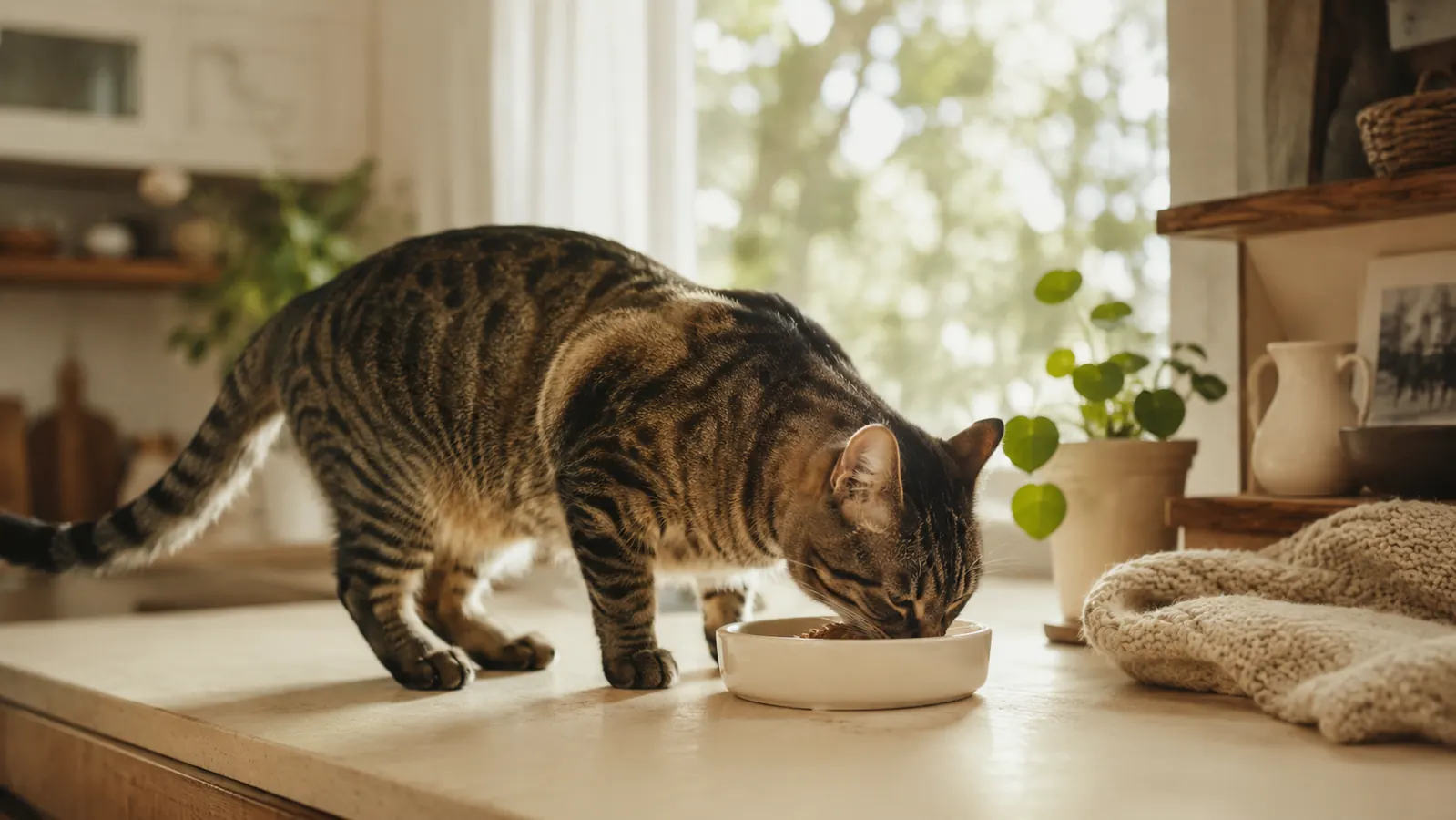
I spent the better part of three years feeding Marigold and Pip what I thought was a perfectly decent kibble. It had nice packaging, a respectable price, and four out of five stars from some reviewer named Brian. Then my vet flipped the bag over, looked at the ingredient panel, and pointed at "corn" sitting in slot number two. She did not have to say much else. Cats are obligate carnivores. Their bodies are built to run on animal protein, not grain fillers. Switching to a high-protein formula was one of the simplest changes I ever made for their long-term health. The food I landed on and have stayed with is Purina Pro Plan High Protein with Probiotics, Chicken and Rice. Here are the ten reasons protein content in cat food matters as much as it does, and why this specific bag keeps earning its spot in my pantry.
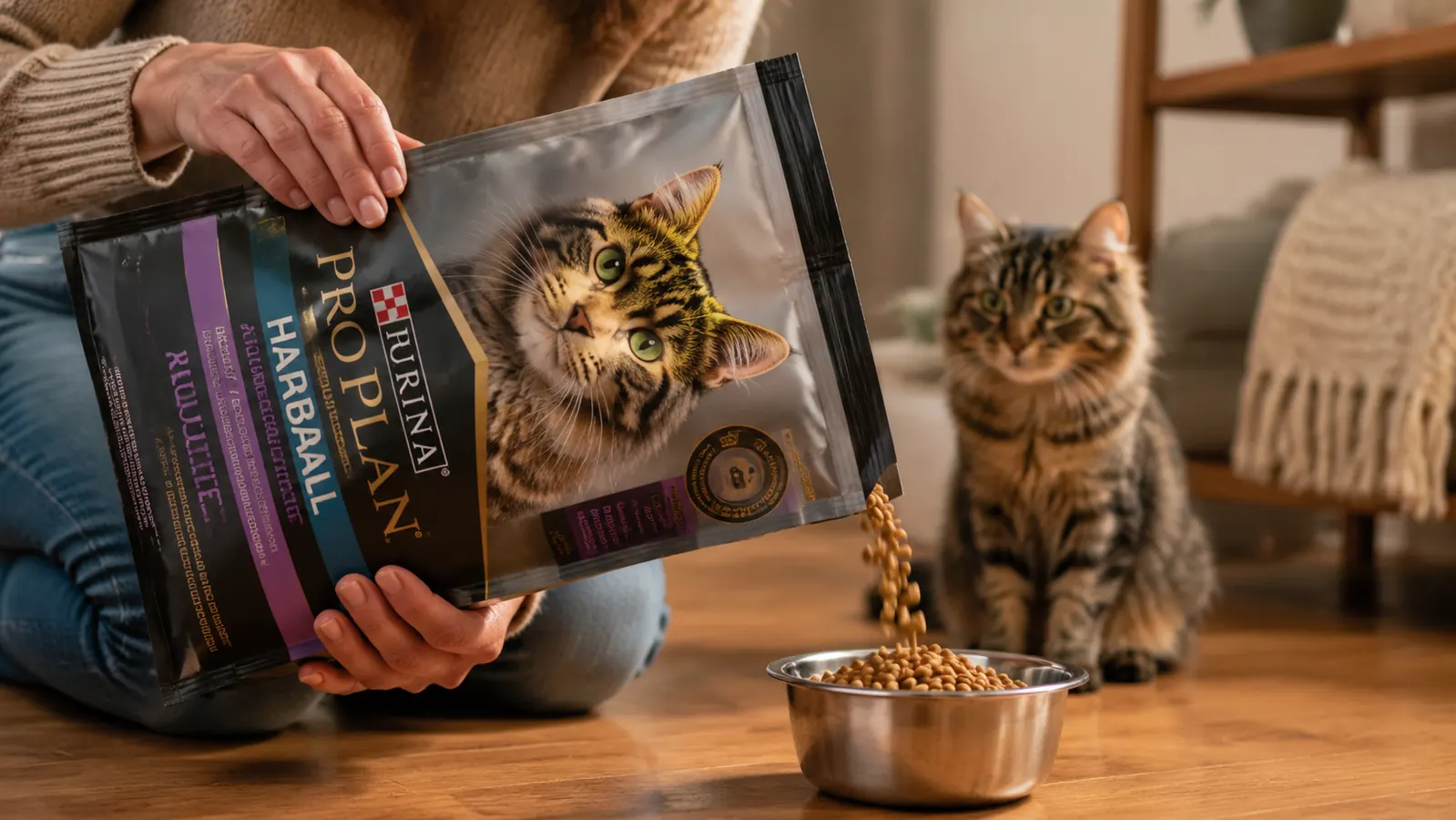
If your cat's food leads with grain over chicken, here is what a better option looks like.
Purina Pro Plan High Protein Cat Food with Probiotics is formulated with real chicken as the first ingredient and a targeted protein level that supports lean muscle in indoor cats of all ages. Rated 4.8 stars from over 3,200 verified buyers.
Amazon Check Today's Price on Amazon →Cats Cannot Make Taurine on Their Own
Taurine is an amino acid that cats must get from food. Deficiency causes dilated cardiomyopathy and retinal degeneration, both of which progress quietly until serious damage is done. High-protein formulas built around animal tissue, like Purina Pro Plan's chicken-first recipe, deliver taurine in biologically meaningful amounts because the amino acid is concentrated in muscle and heart tissue. Grain-heavy foods dilute that. Purina Pro Plan includes added taurine and lists it on the guaranteed analysis. That is not a marketing detail, it is a structural health requirement.
Amazon See Purina Pro Plan on Amazon →Indoor Cats Lose Muscle Faster Than Outdoor Cats
An indoor cat does not chase prey, scale fences, or spend two hours hunting at dusk. That reduced activity means less natural stimulus to maintain lean muscle mass. Without adequate dietary protein, sedentary cats quietly lose muscle over time while body fat creeps up. Purina Pro Plan's protein level (a minimum of 40% crude protein on the dry matter basis in many of their formulas) gives the body the raw material it needs to hold muscle even in a cat who naps twelve hours a day.
Amazon View Purina Pro Plan →Protein Keeps Weight Stable Without Restricting Volume
The indoor cat weight problem is real. The solution most people reach for is "light" kibble, which is just the same carb-heavy formula with less fat. Protein is more satiating gram for gram than carbohydrate. A high-protein diet lets a cat feel full on a normal serving instead of begging forty minutes after the bowl is empty. Pip was doing exactly that on his old food. Three weeks into Pro Plan he stopped haunting the kitchen between scheduled meals. His weight stabilized within two months.
Amazon See Purina Pro Plan on Amazon →A Cat's Liver Is Wired to Run on Protein, Not Glucose
Unlike dogs and humans, cats have a liver that continuously runs gluconeogenesis, meaning it converts protein to glucose even when dietary carbohydrates are available. The mechanism does not switch off when carbs are present. Feed a cat a high-carb diet and you get a cat whose liver is doing extra metabolic work while also processing the incoming carbs. Chronically high carbohydrate loads are linked to feline diabetes, which is increasingly common in middle-aged indoor cats. A diet where protein carries the caloric load works with the cat's metabolic wiring rather than against it.
Amazon Check Purina Pro Plan →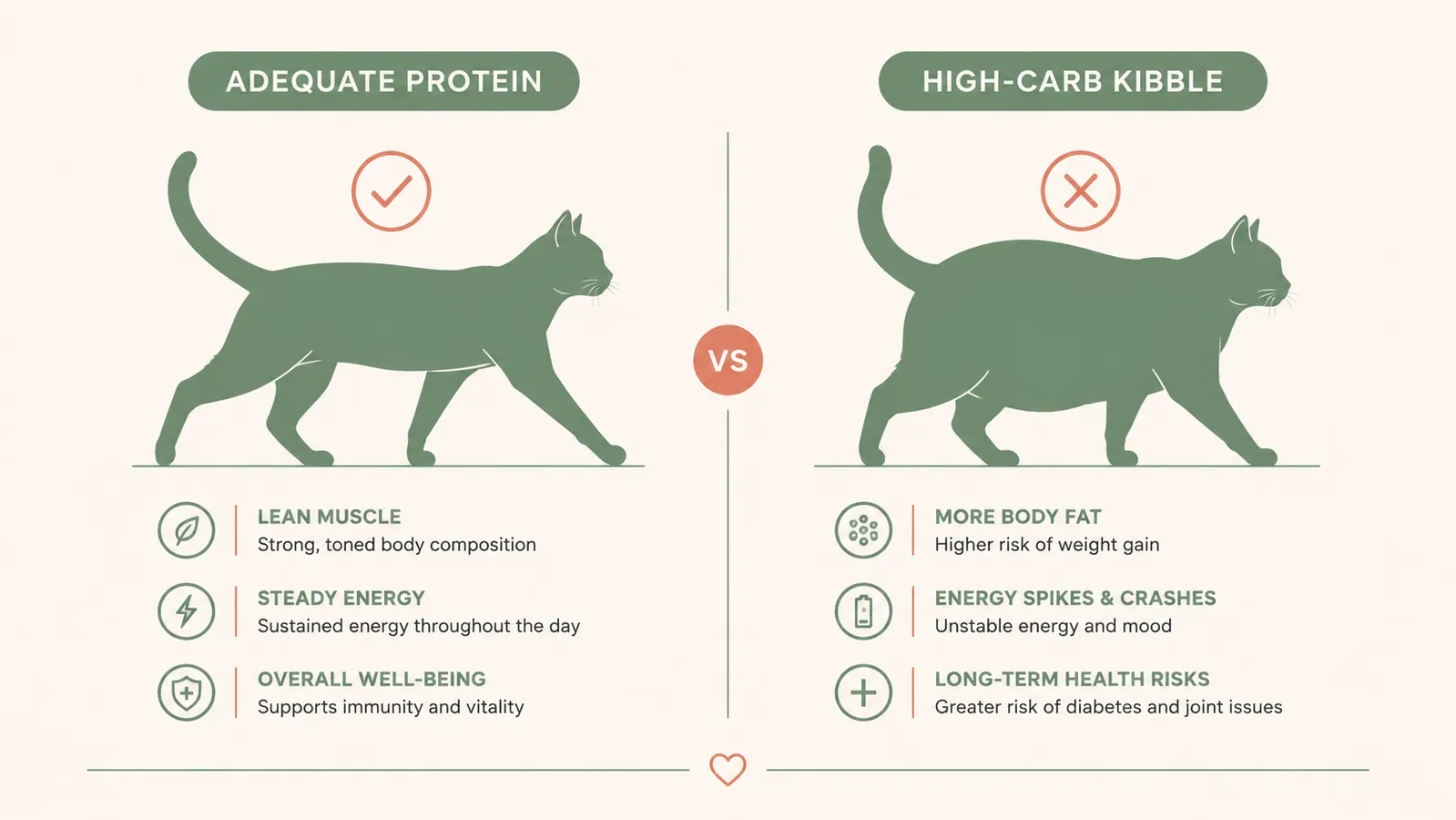
Coat Quality Tracks Protein Intake Closely
Keratin, the structural protein in fur, has to come from somewhere. When a cat's diet is protein-adequate, the body prioritizes it for coat maintenance. When protein is borderline, the body routes amino acids toward organ function first and coat quality slips. Marigold's coat was slightly dull and had fine-texture shedding clumps when I was feeding her a budget grocery store formula. Within about six weeks on Pro Plan it shifted to a noticeably softer, tighter coat with less loose hair on my couch. That is not an advertisement, it is simple protein biochemistry.
Amazon View Purina Pro Plan on Amazon →Protein Supports Kidney Function When It Is the Right Kind
There is a persistent myth that protein causes kidney disease in cats. The research does not support that in healthy cats. What actually stresses kidneys is poor-quality protein that generates excess nitrogen waste. High-quality animal protein from named meat sources, like the chicken in Purina Pro Plan, is highly digestible and produces less nitrogenous byproduct per gram than plant protein or meat by-product meal. If your cat has diagnosed kidney disease, your vet will have specific guidance. For a healthy cat, high-quality animal protein is not a kidney burden, it is appropriate nutrition.
Amazon See Purina Pro Plan →Three weeks into Pro Plan, Pip stopped haunting the kitchen between meals. His weight stabilized within two months. That is what protein satiety actually looks like.
The Probiotic Load in Pro Plan Is a Real Differentiator
Gut health and protein absorption are directly connected. If the gut microbiome is imbalanced, even a high-quality protein can be poorly absorbed. Purina Pro Plan includes live probiotic cultures (Enterococcus faecium SF68) at 100 million CFU per gram, a level backed by Purina's own peer-reviewed research. It is not a label decoration. The reason this matters for protein in particular: a healthier gut lining means more complete absorption of the amino acids the cat actually needs. You pay for premium protein in the formula. The probiotic helps the cat extract it.
Amazon Check Today's Price on Amazon →Urinary Health Responds to Diet Composition
Feline urinary crystals and idiopathic cystitis are among the most common reasons cats end up at the vet. Carbohydrate-heavy diets can contribute to alkaline urine, which favors struvite crystal formation. High-protein, meat-based diets naturally produce slightly acidic urine, which is the environment cat physiology was built for. Marigold has a history of struvite crystals, which is exactly why her vet pushed me toward a protein-forward food. Not every cat will have urinary complications, but why feed a diet that trends in the wrong direction?
Amazon See Purina Pro Plan on Amazon →Digestibility Matters as Much as Protein Percentage
A bag can print 35% crude protein on the panel and still deliver poor nutrition if that protein comes from low-digestibility sources like feather meal or corn gluten. Named meat as the first ingredient is the baseline signal. Purina Pro Plan lists chicken first, followed by rice and chicken by-product meal, which is organ and soft tissue and is actually nutrient-dense. The company publishes digestibility data for their formulas because they have run the studies. Most budget brands have not. Digestibility is where "protein percentage" becomes actual nutrition.
Amazon View Purina Pro Plan →Energy Stability Across the Day Beats Sugar-Spike Kibble
Cats are crepuscular. They are hardwired for two moderate energy peaks at dawn and dusk, not for the blood glucose rollercoaster that comes with high-starch kibble. Carbohydrate-heavy foods cause quick glucose spikes followed by a crash, which maps onto the overeating and food-obsessive behavior that drives a lot of cat weight issues. Protein is digested more slowly and delivers steadier energy. Cats on high-protein food tend to be calmer between meals and more active during their natural activity windows. Both of mine are, anyway.
Amazon Check Purina Pro Plan →What I Would Skip
I would skip any dry food where the first two ingredients are a grain or a grain by-product. Corn, wheat, or soy in the top two slots means the formula is built around cheap filler with protein added on top, not a meat-based formula with complementary carbs. I would also skip any brand that does not publish digestibility data or a feeding trial history. Purina Pro Plan has over 400 published research papers and conducts AAFCO feeding trials rather than relying on formulation alone. That is the bar I now hold other foods to.
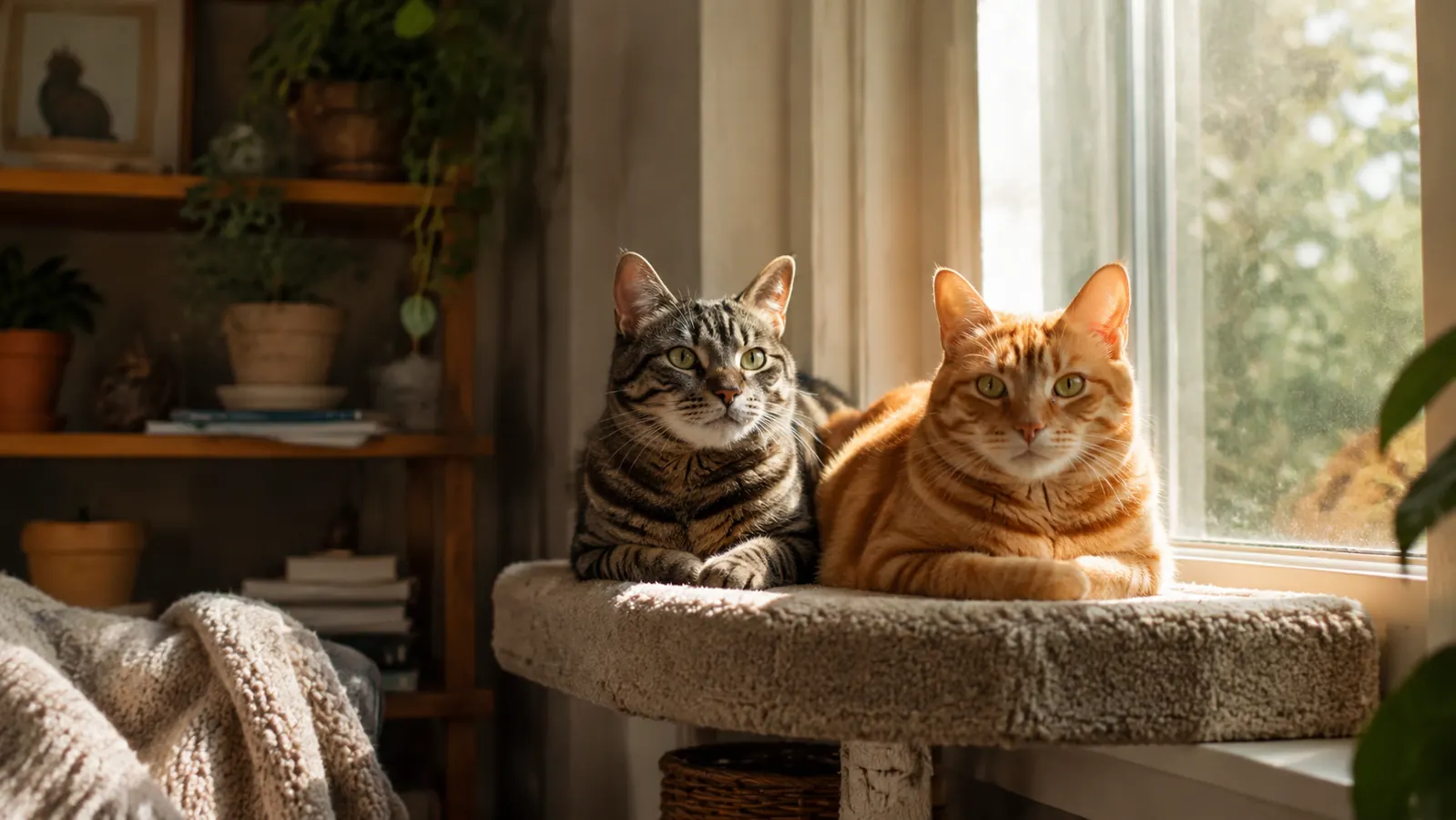
Marigold's coat shifted to noticeably softer and tighter within about six weeks on Pro Plan. That is not a product claim. It is protein biochemistry doing what it is supposed to do.
If you are thinking about switching your cat from a grain-forward kibble to a high-protein formula, the transition does not have to be stressful. I have a full walkthrough on how to do it gradually without upsetting your cat's stomach in my guide on switching your cat to high-protein food. And if you want the complete two-year picture of how Pro Plan has held up across two very different cats, the long-term review has everything I would want to know before buying a 16-pound bag for the first time.
Your cat's bowl should be working harder than most grocery-store kibble lets it.
Purina Pro Plan High Protein Cat Food with Probiotics delivers real chicken as the first ingredient, live probiotic cultures, and protein levels built for obligate carnivores. Over 3,200 verified reviews and a 4.8-star average. Check the current price and bag sizes on Amazon before restocking.
Amazon Check Today's Price on Amazon →