
Disclaimer: This post contains affiliate links. If you purchase through my links, I may earn a small commission at no extra cost to you. I only recommend products I have personally used with my own cats.
Let me tell you what I did not know about Purina Pro Plan before I bought it. I did not know that 'with probiotics' on the front of the bag refers to a single live strain added at a level that varies batch to batch. I did not know that the first ingredient being chicken does not mean the formula is mostly chicken by weight once moisture is removed. I did not know that a significant slice of negative reviews cite loose stools for the first three to four weeks, not three days. I know all of this now, because I spent a weekend reading 3,297 Amazon reviews before my second bag arrived, and then I dug into the ingredient panel with a spreadsheet and a cup of coffee. This is not the review that tells you Purina Pro Plan is good. It is the review that tells you why it is good, what the caveats actually are, and which cats this formula suits best.
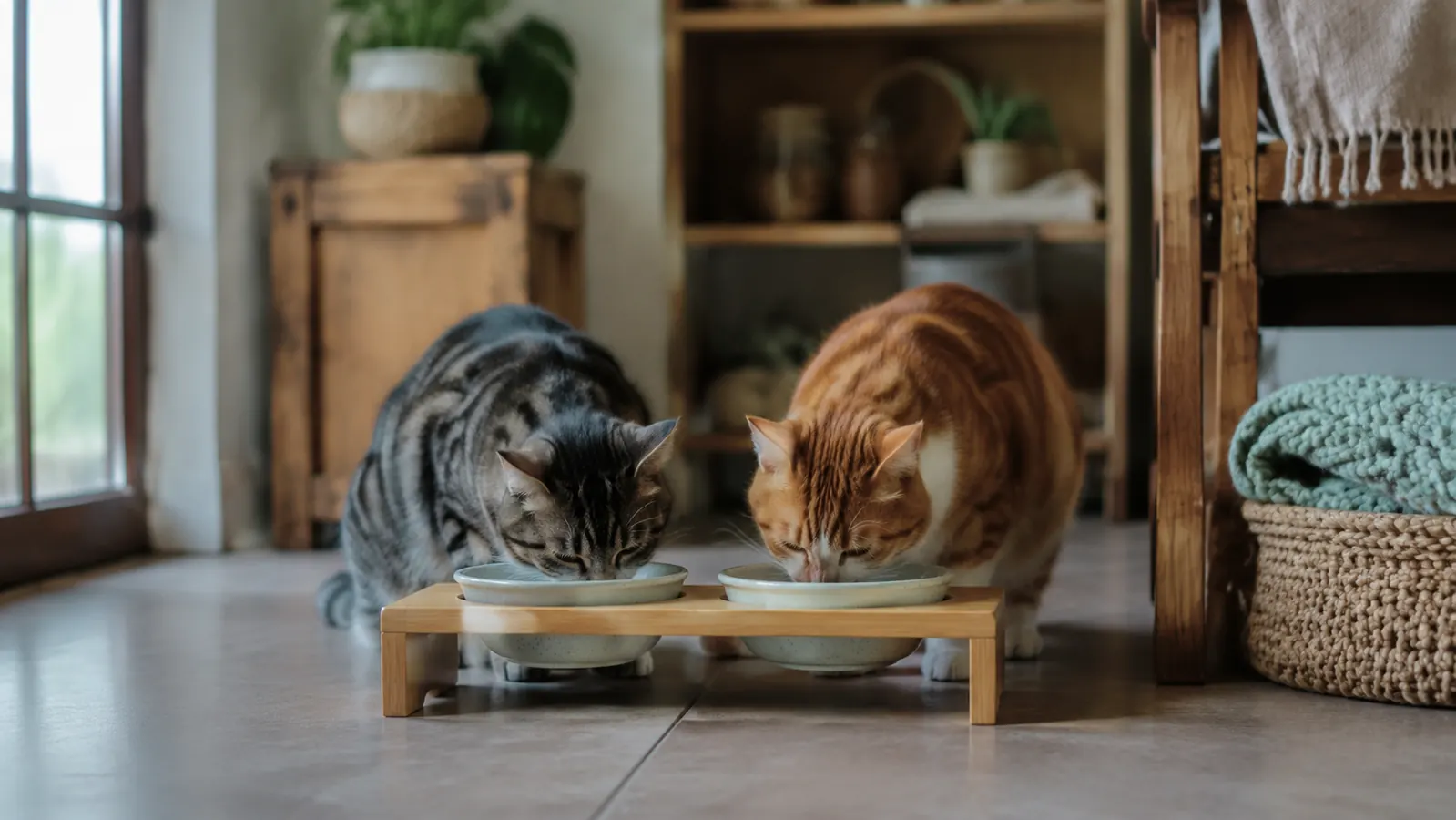
My two cats are Marigold, a 9-year-old gray tabby who has been on two prescription diets, two premium grocery brands, and one wellness formula since her urinary crystals showed up in 2024, and Pip, a 4-year-old orange tuxedo who eats everything put in front of him without complaint and then tries to eat Marigold's portion too. Different cats, different digestive histories, different judgments about what counts as acceptable.
Quick Verdict
Genuinely high-quality dry food for most adult cats, but the transition window is longer than the bag suggests and the probiotic claim deserves more skepticism than the marketing gives it.
Amazon Check Current Price on Amazon →Your cat is eating something every single day. Make sure it's actually worth the cost.
Purina Pro Plan Complete Essentials Chicken and Rice is the formula I settled on after comparing ingredient panels across seven brands. Current pricing and Subscribe-and-Save options are on Amazon.
Amazon Check Today's Price on Amazon →What I Actually Mean When I Say I Read the Ingredient Panel
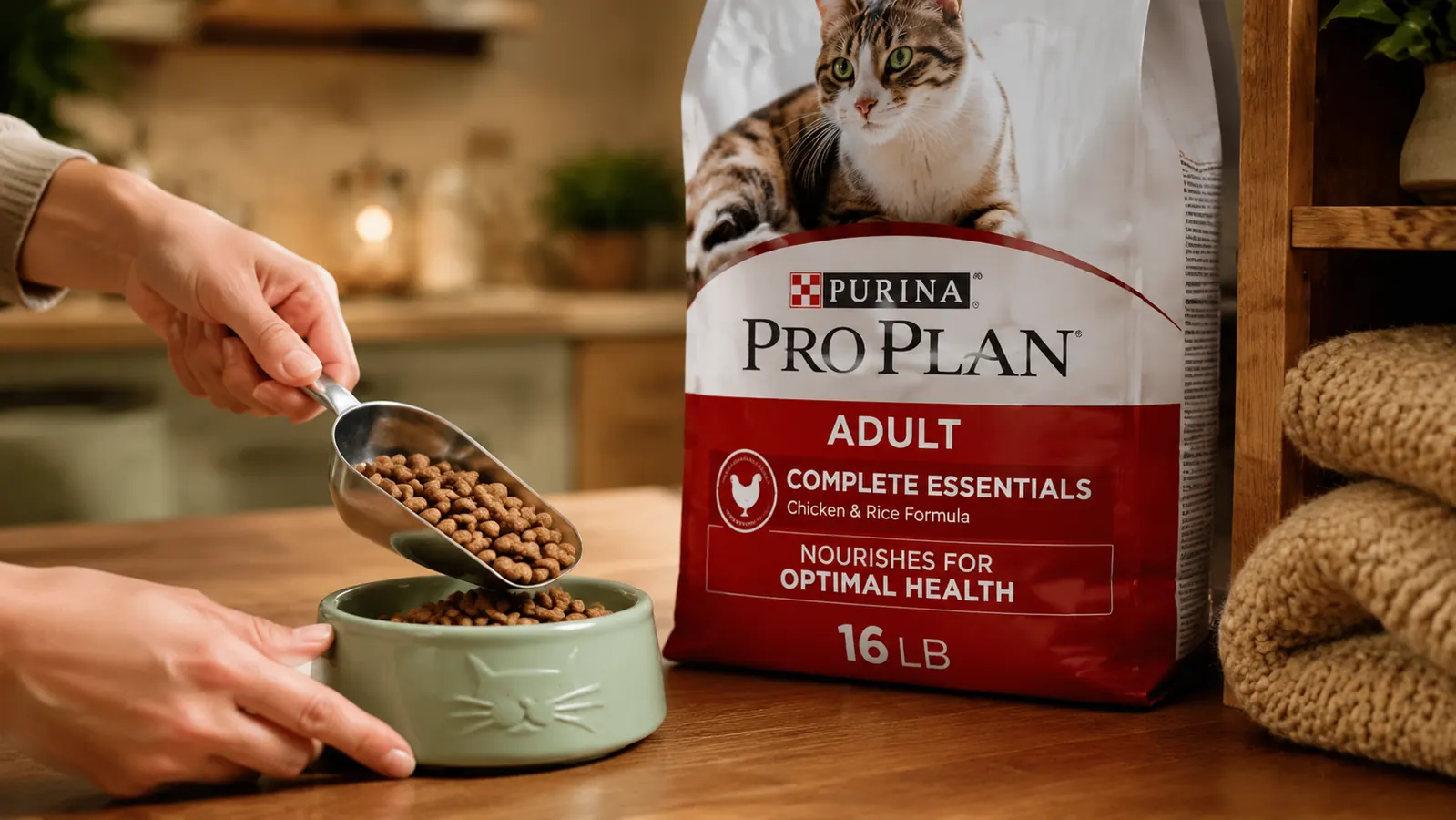
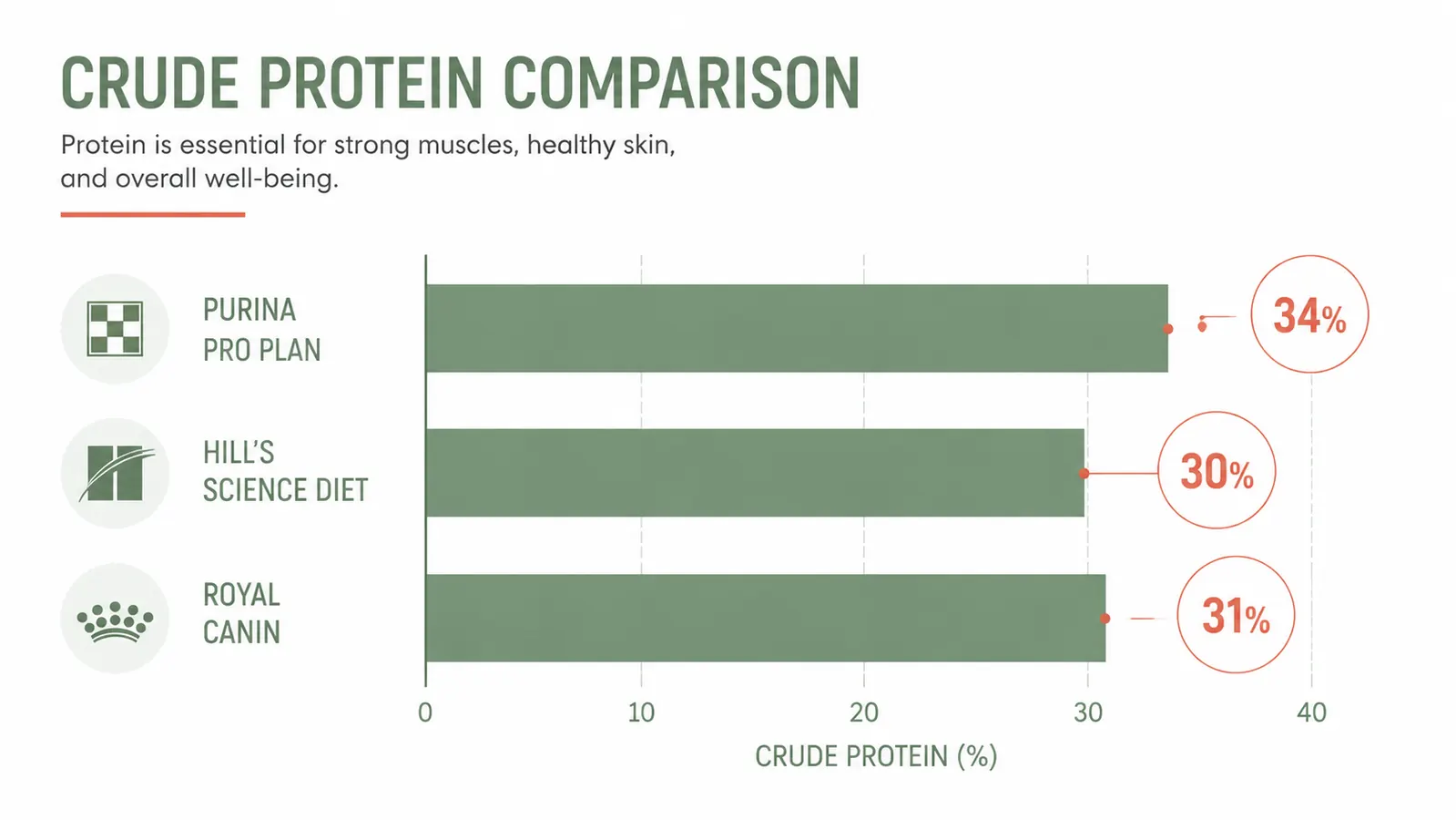
The first ingredient is chicken. This is real, and it matters. Chicken as a fresh ingredient contains roughly 70 percent water. After cooking and kibble processing, that water is driven off, which means the chicken-by-weight ranking on the finished product shifts downward relative to the dry ingredients that follow it. This is not a Purina trick. It is how ingredient labeling works across the entire pet food industry. The relevant question is whether the overall amino acid profile is cat-appropriate once you account for it, and for Pro Plan, the answer is yes. Cats are obligate carnivores with a high protein requirement, somewhere in the 30 to 40 percent range on a dry matter basis. Pro Plan Complete Essentials lands at 34 percent crude protein, which clears that bar.
What follows the chicken matters too. Corn gluten meal appears early, which is a concentrated plant-based protein source. Some cat nutrition sites flag this as a red flag. I think the more nuanced read is that corn gluten meal has a reasonably good amino acid profile for a plant ingredient and that its presence does not automatically make the formula low-quality. What it does mean is that not all 34 percent of that protein is coming from animal sources. If you are looking for a grain-free or strictly animal-protein-only formula, Pro Plan Complete Essentials Chicken and Rice is not that product. Purina does make grain-free Pro Plan lines. This particular formula includes grain.
The fat sources are chicken fat and dried egg product, both of which are good. Taurine is added, which is non-negotiable for cats. The vitamin and mineral package is thorough. On the whole, this ingredient panel reflects a thoughtfully formulated food, not a premium boutique formula, but significantly better than anything at the supermarket level.
The Probiotic Claim: What It Actually Means
The front of the bag says 'with probiotics.' The back panel specifies a guaranteed minimum of 50 million CFU per pound of Lactobacillus acidophilus. That is a real, live, gut-relevant bacterial strain. It is also worth knowing how probiotics survive in dry kibble. Exposure to heat during extrusion kills most probiotic bacteria. To maintain viability, manufacturers typically add live cultures after extrusion, then coat the kibble. Purina does this, and they publish data showing viable cultures survive through the printed expiration date under normal storage conditions.
What this does not tell you is whether 50 million CFU per pound is a therapeutically meaningful dose. Most human and veterinary probiotic research uses doses measured in billions of CFU, not millions. The honest answer is that we do not have strong clinical evidence that the probiotic level in Pro Plan produces measurable gut health outcomes versus the same formula without the probiotic. What the probiotics likely do is provide some marginal benefit during the transition period and for cats with mildly sensitive digestion. For Marigold, who had a genuinely sensitive gut after her urinary diet, the addition was probably a small positive. I would not buy this food primarily for the probiotic claim. I would buy it for the overall protein quality and palatability, and consider the probiotic a bonus.
The probiotic is real. Whether it is doing heavy lifting for your specific cat's gut is a different question, and the honest answer is probably not on its own.
The Complaint Patterns I Found in 3,297 Reviews
Most Amazon reviews are either five-star enthusiastic or one-star furious, with relatively few in the middle. The Pro Plan reviews follow this pattern but with a few consistent complaint themes worth naming. First, soft stools or loose stool during the transition period. This complaint appears frequently in one and two-star reviews, and the reviewers often say they transitioned 'over a week' as the bag recommends. The thing the bag does not tell you is that some cats, particularly those coming from a grain-inclusive food with a very different protein source or from a prescription diet with a novel protein, need a longer window. Three weeks is not unusual for full digestive adaptation. Most of the one-star reviews for digestive upset were posted within the first ten days of feeding.
Second complaint theme: formula changes. A subset of long-term buyers report that batches occasionally smell different, and a few cats refused the food for a week before accepting it again. Purina periodically adjusts minor ingredient sourcing without reformulating the label, which is legal and common. If your cat is particularly food-reactive, this can cause problems that look like a rejection of the brand but are actually a batch-level variation response. Third theme: packaging. The resealable bag closure fails for some buyers. This is a real problem. I bought a bag clip from the kitchen section at Target the week I started feeding Pro Plan and have not thought about bag freshness since.
The positive themes are even more consistent: coat improvement, weight management without portion battle, cats eating with clear enthusiasm. The palatability comments across the positive reviews are striking. 'My picky eater finally finishes her bowl' appears in some form dozens of times.
Subscriber Pricing and the Real Monthly Cost
The 16-pound bag is the format most people buy, and Subscribe-and-Save on Amazon brings the price down meaningfully from the standard list price. A 16-pound bag at current pricing feeds two average-sized adult cats for roughly three to four weeks at standard portions, depending on their weight. That works out to a monthly cost that is higher than grocery store brands and lower than fresh or freeze-dried subscription services. For context, I was spending more per month on Marigold's prescription urinary diet, and Pro Plan with careful water intake management has kept her crystals stable. That comparison is not applicable to every cat, but it shaped my value judgment.
One thing the bag does not mention is that you can stack Subscribe-and-Save discounts by subscribing to multiple items in a single delivery. If you are already ordering litter or treats on Subscribe-and-Save, adding the cat food to the same delivery window gives you the higher discount tier. It is a small thing, but it adds up over the course of a year. See my full notes on switching foods and portion sizing in the guide on how to switch your cat to a high-protein food.
How Marigold and Pip Actually Responded
Marigold took eleven days to fully accept the transition. Days one through five went fine at 25 percent new food. Day six I went to 50 percent and she started leaving a quarter of her bowl. I dropped back to 30 percent and held there for five more days. By day eleven she was eating the full portion without hesitation and her stools were back to normal. This is not a story of disaster, but it is a story of needing more patience than the bag implies. Marigold's coat started looking noticeably shinier around the four-week mark, which I attribute to the higher protein and fat quality.
Pip required no transition management whatsoever. He ate 100 percent Pro Plan on day one and asked for more. He is four, he came from a shelter at eight months, and his gut appears to have the adaptability of a mountain goat. His coat has always been good, and it remained good. His weight has stayed stable at 10.4 pounds, which is right where his vet wants him. The palatability for him has been essentially perfect, which matters because Pip turning his nose up at a food is a reasonably reliable sign something is off.
I also want to be honest about what Pro Plan has not done. It has not resolved Marigold's occasional vomiting. She vomits hairballs roughly once every two weeks, same as before the switch. The food did not worsen it and did not fix it. If your cat has a chronic vomiting issue, I would not bank on this formula solving it. That is a conversation for your vet.
Pros
- 34 percent crude protein on a dry matter basis, one of the higher levels among mainstream brands
- Palatability is genuinely strong, including for picky eaters
- Live probiotic included, with published viability data through expiration
- Veterinarian-recommended status backed by long-term feeding trials, not just marketing claims
- Subscribe-and-Save pricing makes it competitive against mid-tier alternatives
- Widely available, easy to reorder, consistent Amazon fulfillment
Cons
- Transition window is longer than the bag suggests, especially for sensitive-gut cats
- Corn gluten meal appears in the ingredient list, so not all protein is animal-sourced
- Bag reseal closure is unreliable, requires a separate clip or transfer container
- Occasional batch-level variation in smell can cause temporary refusal in sensitive cats
- The probiotic dose, while real, is unlikely to produce dramatic digestive effects on its own
- Not a grain-free formula for cats whose vets have recommended avoiding grains
How It Compares to What I Fed Before
Before Pro Plan, Marigold was on Royal Canin Urinary SO, which is a prescription formula and not a fair comparison on price or availability. Before the prescription diet, she was on a mid-tier wellness brand that I liked on paper but that she increasingly ignored in the bowl. Pip came to me eating a shelter-brand kibble and had been on a natural-ingredient regional brand before I made the switch. The biggest observable difference moving to Pro Plan was acceptance and coat quality. Neither cat had been rejecting their prior food outright, but neither had been finishing bowls consistently either. That changed within two weeks of being fully transitioned.
If you are choosing between Pro Plan and Hills Science Diet, the protein levels are different and the ingredient philosophy is different. I covered that comparison in detail in the Purina Pro Plan vs Hills Science Diet head-to-head article. The short version is that Pro Plan runs higher protein, Hills runs a stricter science-backed nutrient profile, and the right choice depends on your specific cat's life stage and health status.
Who This Is For
Pro Plan Complete Essentials Chicken and Rice is a good fit for healthy adult cats who eat dry food as their primary diet, for cat owners who want veterinarian-recognized quality without the prescription-diet price tag, and for multi-cat households where one pet-food brand needs to work across different temperaments and digestive sensitivities. It is also a strong choice if your cat has been rejecting previous foods, because the palatability record across thousands of reviews is genuinely hard to argue with.
Who Should Skip It
Skip this formula if your vet has specifically recommended a grain-free or limited-ingredient diet. Skip it if your cat is already thriving on a current food with no issues, because switching for the sake of switching is not worth the transition stress. Skip it if your cat has a known corn sensitivity. And be realistic about the transition timeline if your cat has a history of gut sensitivity: plan for three to four weeks, not seven days, and go slower than the bag tells you to.
If your cat has been ignoring her bowl, this formula has a stronger palatability track record than most.
Purina Pro Plan Complete Essentials Chicken and Rice, 16 lb. bag. Check the current Subscribe-and-Save price on Amazon before you reorder your usual brand.
Amazon Check Today's Price on Amazon →