
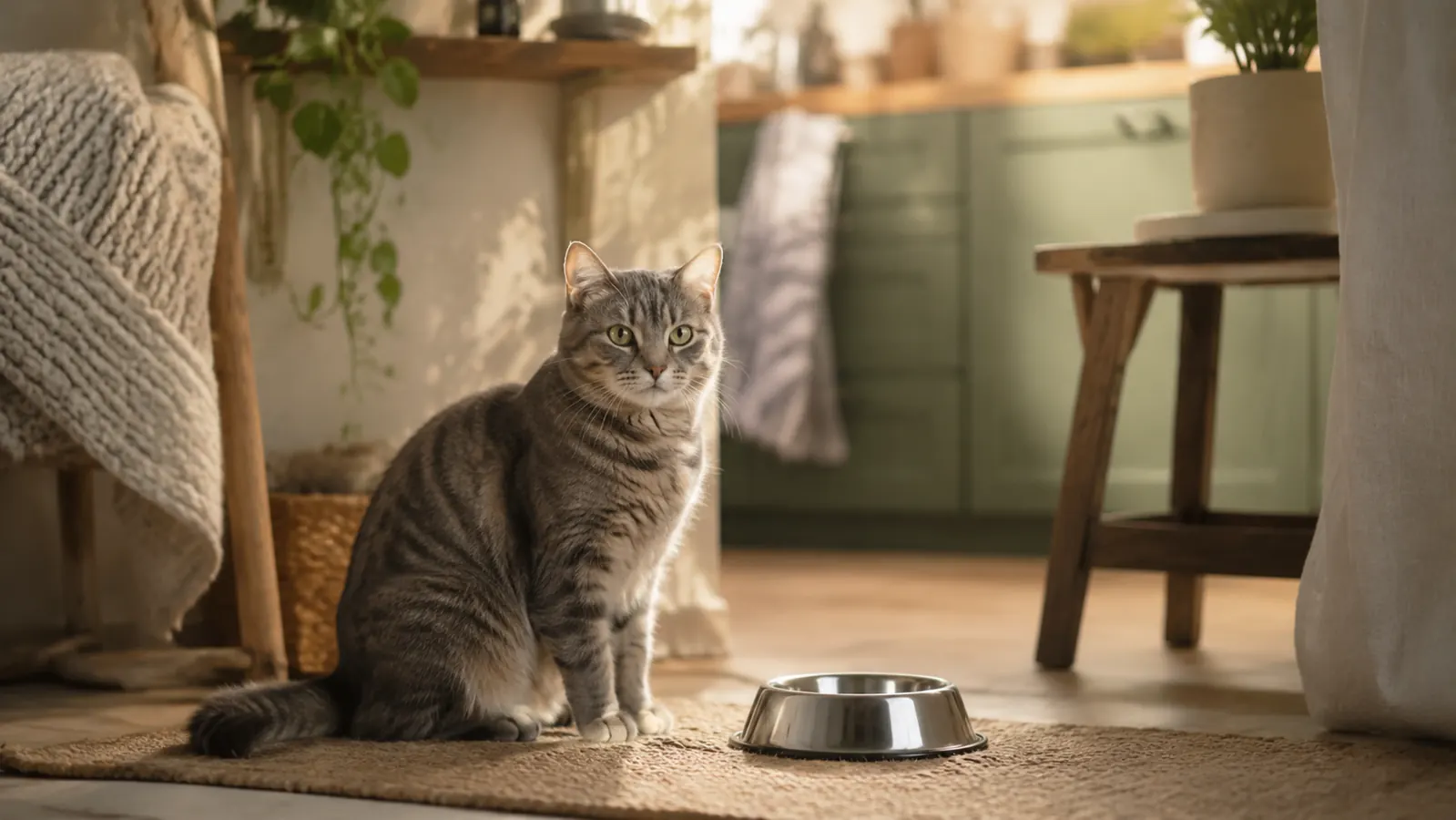
The fix that finally worked for us was switching to a high-protein cat food, specifically Purina Pro Plan Complete Essentials Chicken and Rice, the bag I will walk you through using below. When my vet looked at Marigold's bloodwork in early 2025 and said the words "muscle condition score," I knew we had a problem. My 9-year-old gray tabby had been on the same mid-grade kibble for four years, and it showed. She had lost a noticeable amount of lean muscle along her spine, her coat was duller than it used to be, and she was snacking off Pip's bowl in the evenings, which she never used to do. The recommendation was straightforward: get her onto a higher-protein formula, and do it before the trend got worse.
What the vet did not explain in detail was how to actually make the switch. I assumed I could just swap the bag and both cats would get on with it. I was wrong. The first attempt ended with Marigold leaving food in her bowl, Pip having loose stools for three days, and me driving to the pet store at 9 p.m. to buy the old food back. That failure taught me more than the eventual success did. Here is the full method I worked out over the following two months, including the food I landed on and the specific steps that got both cats through the transition without incident.
If your cat has lost muscle mass or coat quality, the food bag is usually the first place to look
Purina Pro Plan High Protein Chicken and Rice is the formula I switched Marigold and Pip to after the vet raised the muscle condition concern. It has 40 grams of protein per cup, chicken as the first ingredient, and live probiotic cultures that genuinely helped with the digestive transition. Over 3,200 verified buyers and a 4.8-star rating. Check today's price below.
Amazon Check Today's Price on Amazon →Before we get into the steps, a quick note on why abrupt food changes hit cats so hard. Cats produce specific digestive enzymes calibrated to whatever they are currently eating. When you change the fat-to-protein-to-carbohydrate ratio overnight, their gut flora and enzyme output have not caught up. High-protein formulas are also typically lower in fillers and carbohydrates than grocery-store kibble, which means your cat's digestive system is being asked to process a different nutritional profile with tools that were built for the old one. The slower you go, the fewer problems you will have. I now tell anyone who asks: go twice as slowly as you think you need to.
Step 1: Pick One Food and Commit to It Before You Open the Bag
The single biggest mistake I made on the first attempt was introducing the new food before I had fully committed to it. I bought a small bag to "test," saw Marigold sniff it and walk away, and immediately lost confidence. That uncertainty bled into the transition itself: I went back and forth too fast, reversed course when I saw any hesitation, and ended up confusing Pip's gut in the process.
Before you open the new bag, read the ingredient list and decide you are satisfied with it. For the switch I eventually made to work, I chose Purina Pro Plan High Protein Chicken and Rice because the ingredient list is clean (chicken is the first ingredient, no corn gluten meal, no artificial preservatives), the protein content is meaningfully higher than what Marigold had been eating, and the live probiotic cultures are a real plus for a cat whose stomach was going to be under some stress during the transition. Committing before you begin means you will not bail at the first sign of a turned-up nose.
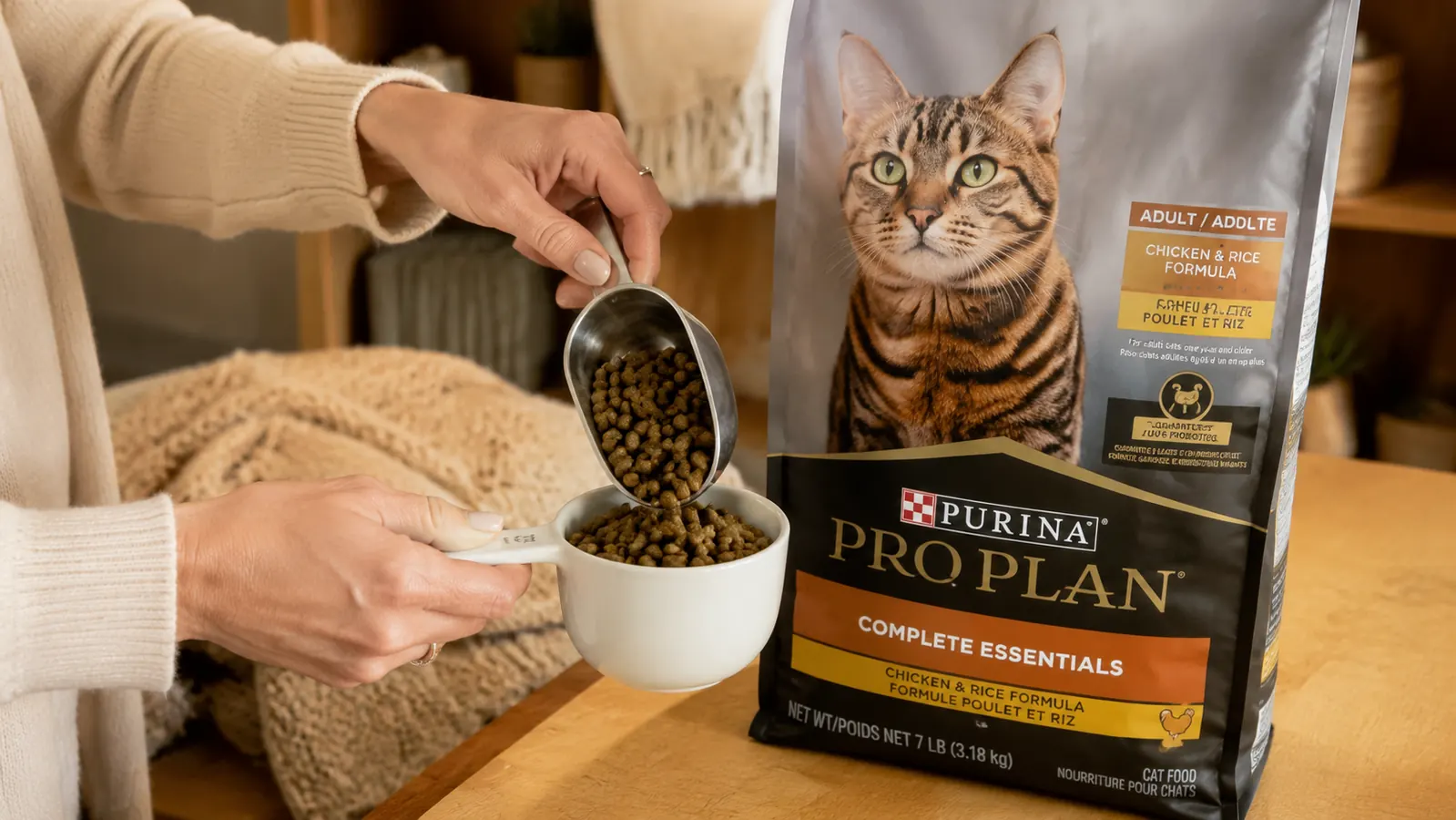
Also buy the full-size bag from the start. A 16 lb bag of Purina Pro Plan costs less per ounce than the small bags, and if the transition goes well (it will, if you follow these steps), you will go through it within a few weeks with two cats. The small-bag "trial" approach just makes the math worse.
Step 2: Run a 10-Day Mixing Schedule, Not a 7-Day One
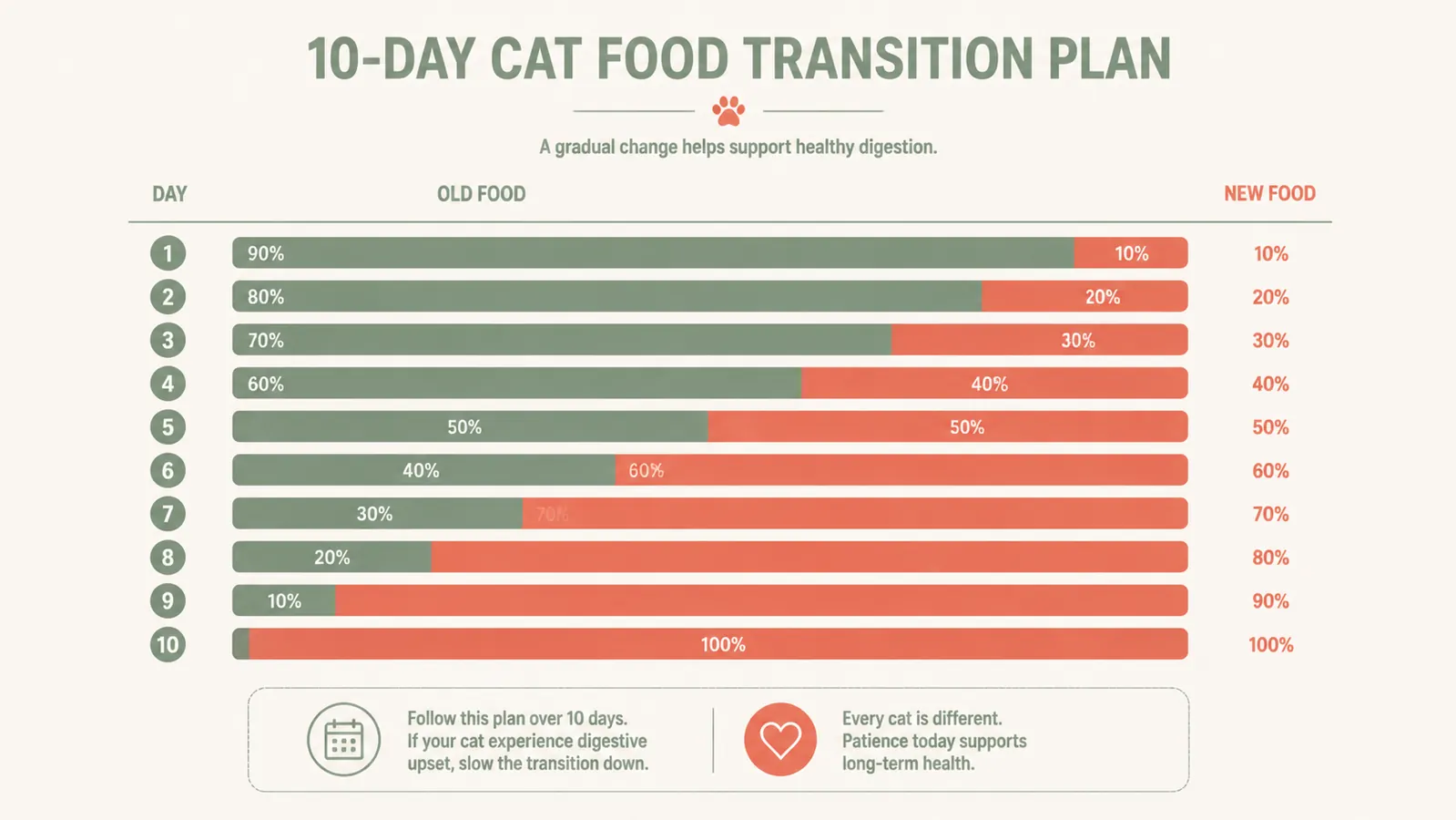
Most cat food bags say to transition over 7 days. For healthy young cats moving between similar formulas, 7 days may be fine. For cats switching from a low-protein, high-carbohydrate grocery brand to a protein-dense performance formula, 10 to 14 days is more realistic. Marigold is 9 years old with a history of urinary crystals in 2024, and her system needed more runway. Here is the exact schedule I used.
Days 1 and 2: 90% old food, 10% new food. Days 3 and 4: 75% old food, 25% new food. Days 5 and 6: 60% old food, 40% new food. Day 7: 50/50. Days 8 and 9: 25% old food, 75% new food. Day 10: 100% new food. Measure by volume in the actual serving scoop you use, not by weight. The goal is to change the ratio slowly enough that neither cat's digestion ever gets shocked. If you see loose stool or vomiting at any ratio, stay at that ratio for two more days before advancing.
I kept a simple notepad on the refrigerator with the day and ratio written out. It sounds overly formal, but when you are feeding two cats at 6 a.m. before coffee, having the ratio already decided removes any guesswork. Pip moved through the schedule without a single incident. Marigold paused at the 50/50 day, when she left about a third of her bowl, and I held that ratio for an extra day before continuing. That one extra day was all it took.
Step 3: Keep Everything Else the Same During the Transition
When I made my first failed attempt, I also switched Pip to a new ceramic bowl I had been wanting to try, moved the feeding station slightly to get it off the rug I was tired of wiping down, and introduced a new wet food topper at the same time. That is too many variables at once. Cats are creatures of routine in a way that sneaks up on you when you change multiple things simultaneously.
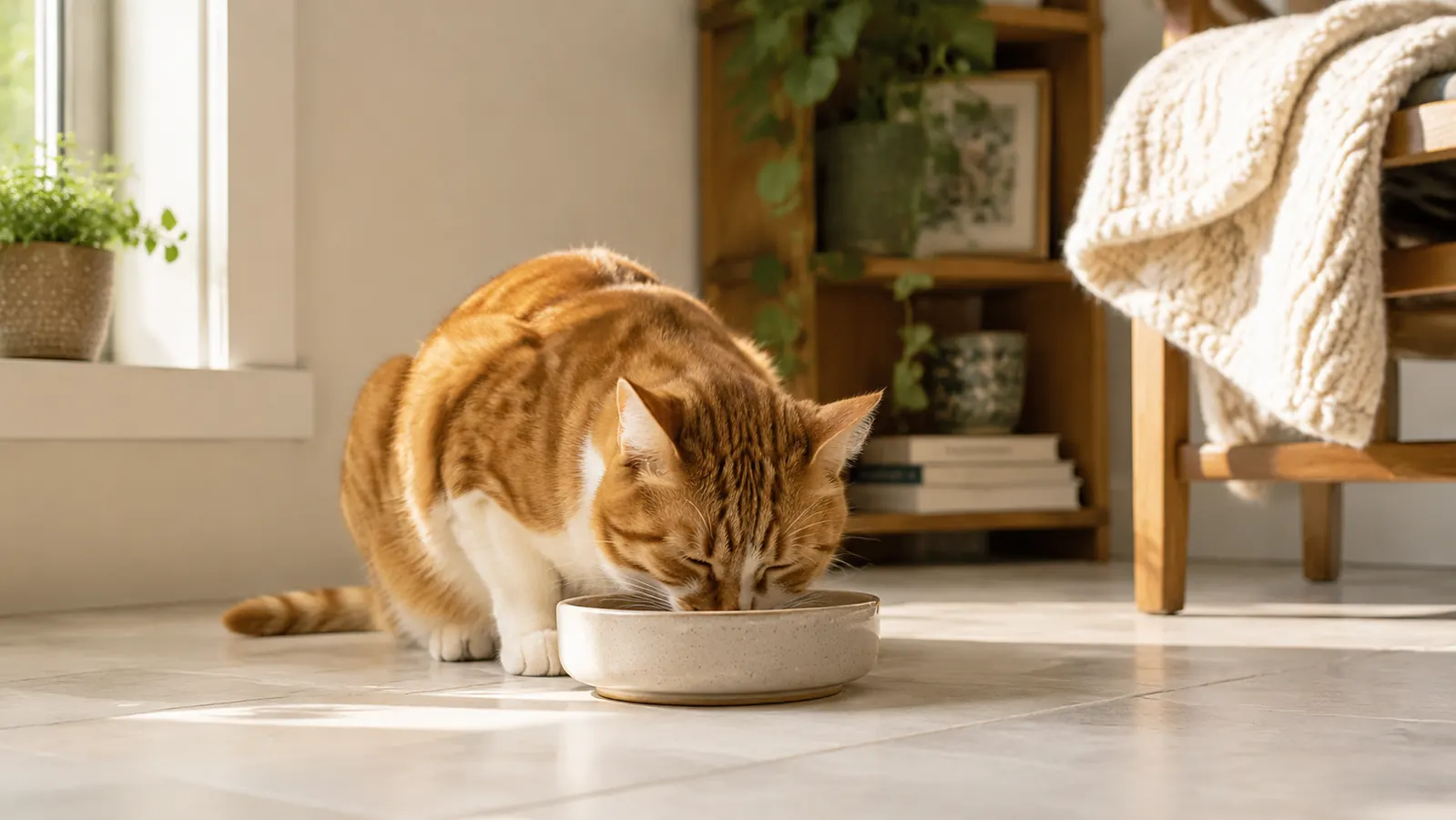
During the successful transition, I kept the same bowls (Marigold has a shallow wide ceramic dish because of her whisker sensitivity, Pip uses a stainless bowl I picked up at a local pet shop two years ago), the same feeding location, the same feeding times, and the same portion sizes. The only variable was the ratio of old food to new food. Eliminating other changes makes it much easier to identify the actual cause if something goes wrong. If Marigold stops eating at the 75/25 stage, I know it is the food ratio and not the bowl or the location or a new smell in the kitchen.
The first transition failed because I changed too many things at once. The one that worked changed only one thing: the ratio of old food to new food, one step at a time.
Step 4: Watch These Four Signals, Not Just the Bowl
Most guides tell you to watch for vomiting and loose stools. Those are obvious signs, but there are subtler signals that will tell you earlier whether the transition is going smoothly or starting to stress your cat.
First, watch litter box output. Consistency should be similar to baseline, maybe slightly firmer as the higher protein content reduces filler bulk. Any significant loosening for more than one day is a reason to hold the current ratio. Second, watch water intake. Higher-protein dry food is still dry food, and some cats drink less water than they should. If you notice your cat at the water bowl more than usual or panting slightly, check hydration by gently pinching the scruff: it should spring back instantly. Third, watch body language around the bowl. A cat who sniffs and walks away once is being picky. A cat who approaches the bowl and then backs away repeatedly over two or three meals is telling you something is wrong, not just making a preference statement. Fourth, watch coat texture. This one is slow to show, but by week three on a protein-rich formula, most cats will start showing a visible improvement in coat gloss. By week four on Pro Plan, Marigold's coat along her back felt noticeably softer and had a sheen it had been missing for over a year.
The one signal I ignored during the failed first attempt was the repeated-approach behavior at Pip's bowl. He was approaching the bowl, smelling it, stepping back, and then approaching again. I read it as enthusiasm. It was actually early gastric discomfort. When I finally paid attention and slowed the ratio, the behavior stopped within two days.
Step 5: Lock In the Routine and Order on Subscribe and Save
Once both cats reached 100% new food without incident, I gave them another full week at that level before changing anything else. That buffer week matters. Sometimes a cat will sail through the transition and then have a reaction at full concentration that did not appear at the 75/25 or 50/50 stages. Staying at 100% for a full extra week before locking in the routine confirms that the digestive system has fully adapted.
After that buffer week, I set up a Subscribe and Save order for the 16 lb bag on a 6-week delivery schedule. Two adult cats with different portion sizes burn through a 16 lb bag in about five to six weeks. Subscription pricing is meaningfully lower than one-off pricing, and with a high-quality food that costs more per bag than grocery brands, that discount adds up over a year. Set the delivery frequency based on your cats' combined consumption so you never run low enough to be tempted to bridge with the old food.
I also label a piece of tape on the bag with the date I opened it. Dry kibble should be used within six weeks of opening to preserve the fat content and the live probiotics in Pro Plan's formula. If you are feeding one cat and a 16 lb bag takes longer than six weeks, move down to the smaller bag size even if the per-ounce cost is higher. Stale kibble undermines the whole point of upgrading the food.
What Else Helps During the Transition
A few supporting moves made the transition easier for both cats. Adding a small amount of warm water to the bowl during the first few days of mixing helped carry the scent of the new food more evenly through the serving and made the blend smell more uniform. It is a simple trick, but Marigold is nose-first about everything and it reduced the "this smells different" hesitation she showed at the 75/25 stage.
I also temporarily stopped giving treats during the transition period. Treats add a variable to the digestive load and can mask whether any stomach issues are coming from the food change or from the extra treats. Two weeks without treats is a small ask for the clarity it provides. Both cats survived and were visibly pleased when the treat pouch reappeared after the transition wrapped up.
If your cat is a hard resister at the 50/50 stage and refuses to advance further, a wet food version of the same protein profile can sometimes bridge the gap. Purina Pro Plan offers wet food in similar high-protein formulas. A tablespoon of wet food mixed over the dry at the stubborn ratio stage often nudges reluctant cats forward without adding a completely foreign smell to the bowl. I did not need this for Marigold, but I have recommended it to two friends who hit the same wall with their picky eaters and both had it work.
If you want a deeper look at why high-protein food matters for indoor cats specifically, the article on 10 reasons high-protein cat food matters covers the physiology in more detail. And if you are deciding whether Purina Pro Plan is the right formula for your cat before committing, the full long-term review covers two years of daily feeding across two cats with different needs.
Your cat's gut needs runway. Give it 10 days and the right food to transition into.
Purina Pro Plan High Protein Chicken and Rice is the formula Marigold and Pip both landed on after the transition I described above. Chicken first ingredient, 40g protein per cup, live probiotics to support the digestive shift, and a 4.8-star rating from over 3,200 buyers who went through this same process. It ships fast and the Subscribe and Save discount makes the per-bag price reasonable for a premium formula.
Amazon Check Today's Price on Amazon →