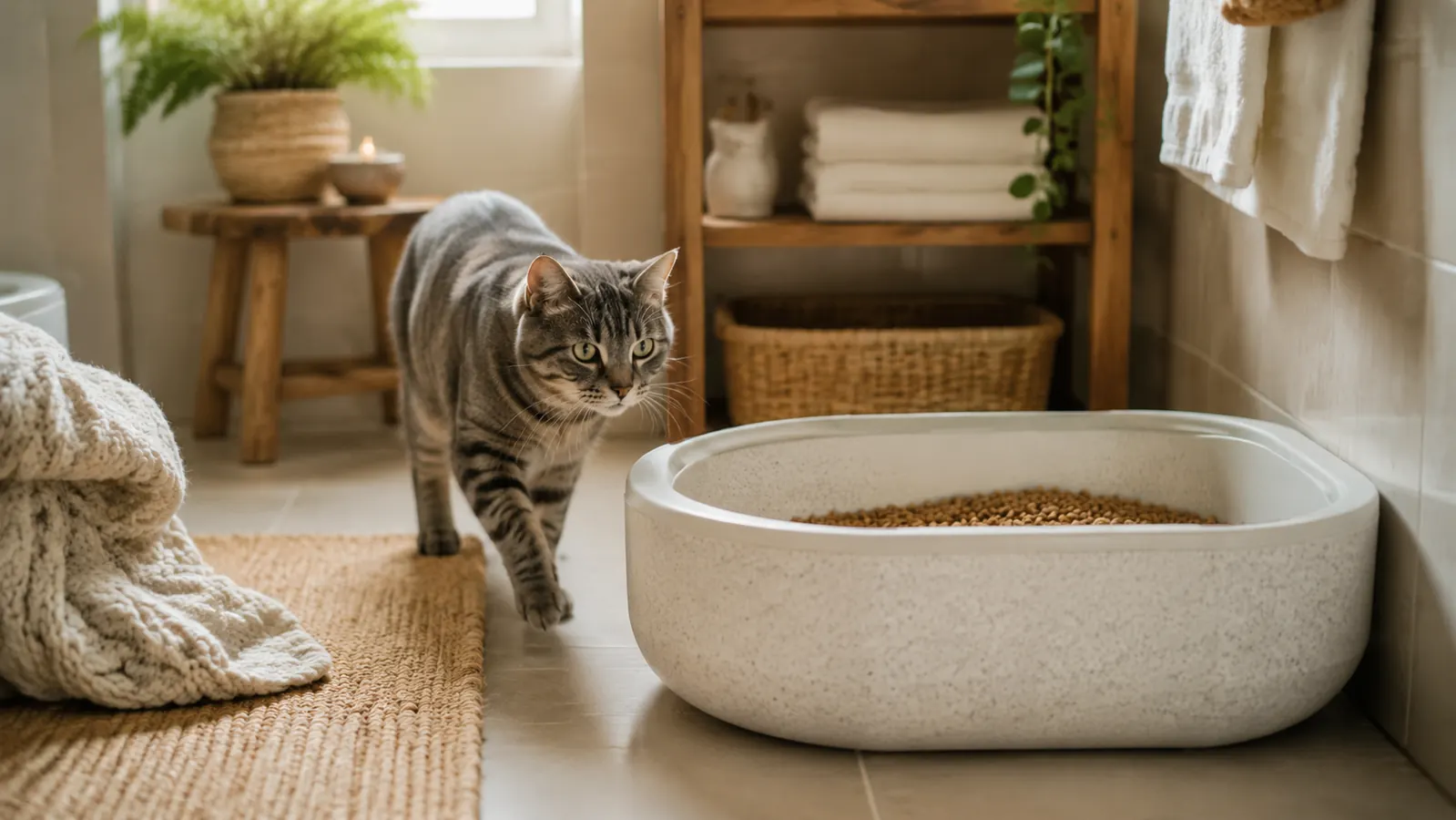
When Marigold, my 9-year-old gray tabby, started tracking fine clay dust through the entire house, I knew the litter situation had to change. She's been on a prescription urinary diet since her crystals showed up in 2024, and her vet had mentioned more than once that airborne clay particulates weren't doing anyone's lungs any favors. Pine pellet litter was the obvious answer. The problem was convincing Marigold, who has strong opinions about everything from her food bowl placement to which side of the couch belongs to her.
I'd tried switching litter types twice before with bad results. The first time I just swapped everything out cold turkey and she used my laundry pile instead for three days. The second time I got nervous and abandoned the transition halfway through. Pine pellets are fundamentally different from clumping clay in texture, smell, and behavior, and cats notice all three immediately. What works is a slow, methodical mix-in approach over four to five weeks. I walked both Marigold and my 4-year-old orange tuxedo Pip through this exact method using Feline Pine Platinum, and both are now fully converted with no accidents. Here is exactly how to do it.
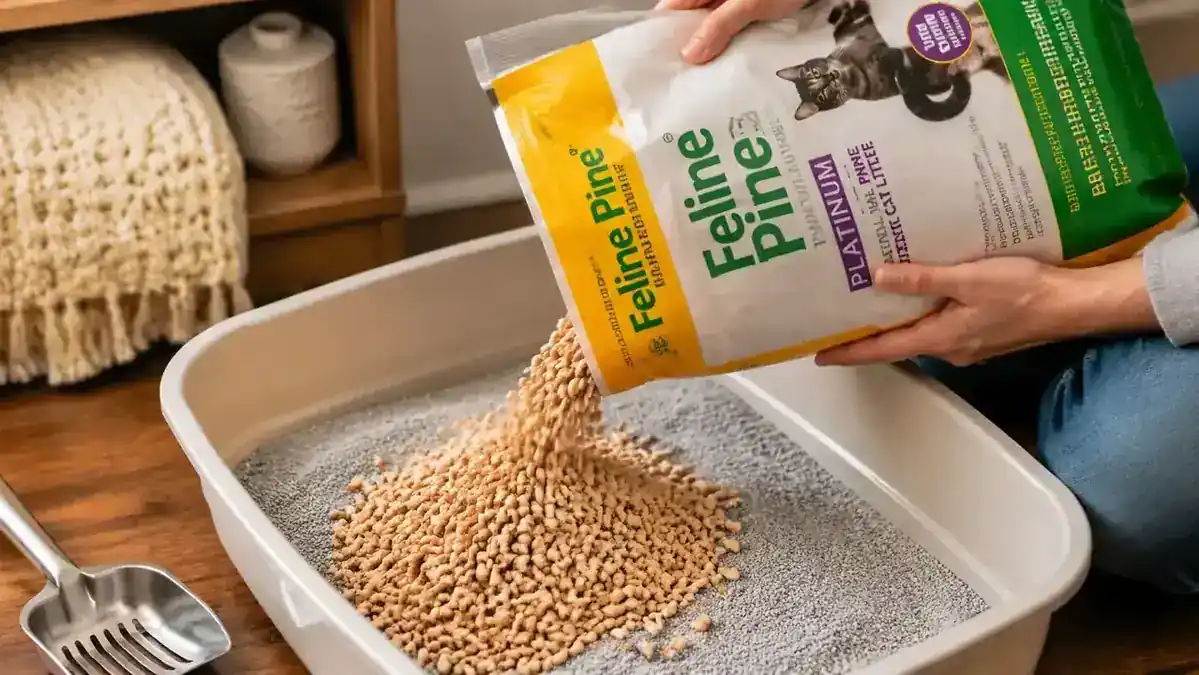
Tired of tracking clay dust to every room? Feline Pine Platinum is what I used for this transition.
Feline Pine Platinum is a non-clumping pine pellet litter with over 10,000 Amazon reviews and a 4.3-star rating. It absorbs ammonia odor naturally through the pine, breaks down into sawdust when wet, and produces almost no tracking dust. Check today's price and see if Subscribe and Save is available.
Amazon Check Today's Price on Amazon →Step 1: Get the Right Box Setup Before You Start
Pine pellet litter does not work well in a standard enclosed litter box, and it works terribly in self-cleaning boxes. The pellets need airflow to dry out and they need to break down into sawdust over time. The sawdust falls through a sifting insert to the lower tray, where it gets disposed of, while intact pellets stay up top and continue absorbing. Before you put a single pellet in the box, decide how you want to handle that sawdust situation.
The two main options are: a dedicated sifting litter box (a two-tray system where the top tray has a mesh or slotted bottom), or a standard open box with a thin layer of pine where you just scoop out the wet sawdust clumps manually. The sifting system is cleaner and more hands-off, but it does require a small extra purchase if you do not already own one. I use an open-top Sterilite container 16 inches wide and 24 inches long for Marigold because she likes room to turn around. Pip, being younger and less opinionated, uses a basic sifting system. Either works. The point is to decide now, before you bring a new litter type into the picture and add another variable.
Also: add a second litter box to your home for the duration of the transition if you only have one per cat. Cats under stress from a litter change sometimes refuse the box entirely and look for alternatives. Having an extra option reduces that pressure significantly. It does not have to be fancy, a $4 plastic bin from a discount store works perfectly.
Step 2: Week One, Start With 90% Clay and 10% Pine
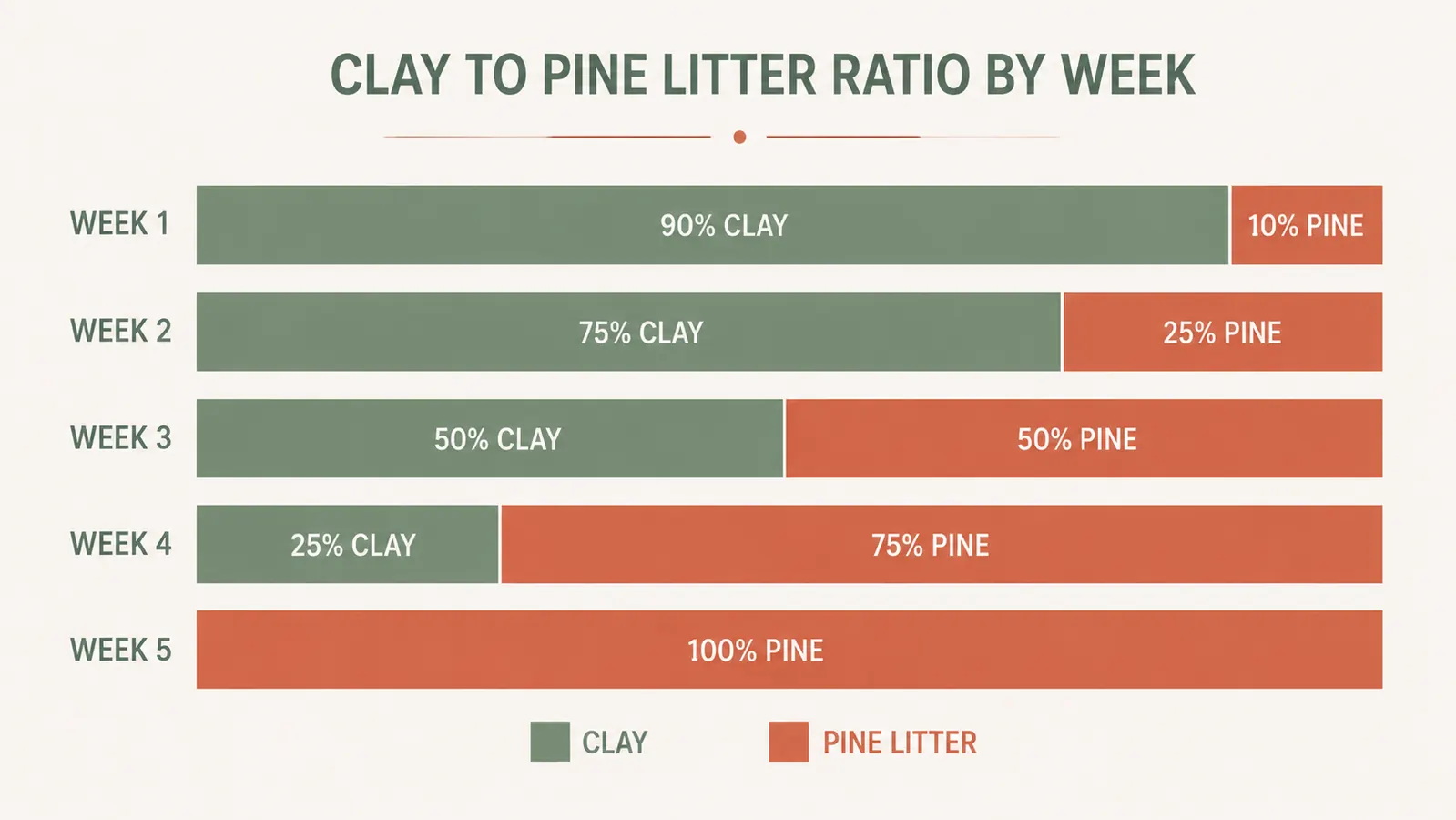
Do not start with a 50/50 mix. That is too much change at once for most cats. On day one of the transition, clean the box completely, add your normal amount of clay litter, then sprinkle a thin layer of pine pellets on top. The goal at this stage is just exposure to the smell and texture, not a functional switch. The ratio should be roughly 90% clay and 10% pine by volume.
Watch what your cat does when they encounter the box. Some cats immediately sniff the pellets and then use the box normally with no reaction at all. Others approach the box, look at you with visible judgment, and then use it anyway. A small number will pause, turn around, and walk out. That last reaction is a signal to slow down even further, but it is not a reason to stop. Give them 24 to 48 hours to get used to the new smell before drawing any conclusions. Pine has a natural cedar-adjacent scent that is unfamiliar to clay-litter cats. It is not unpleasant, just different, and most cats adjust within a couple of days.
Maintain the 90/10 ratio for the full first week. Do not rush ahead just because things seem to be going fine. You are building a scent memory and a physical tolerance for the different texture underfoot. Both take time.
Step 3: Week Two and Three, Shift the Ratio Gradually
At the start of week two, clean the box and adjust to roughly 75% clay and 25% pine. At the start of week three, go to 50/50. If your cat has been using the box consistently with no accidents outside the box, this pace is safe to maintain. If you have seen any hesitation or avoidance in week two, hold at 75/25 for an extra week before moving forward.
The 50/50 week is usually where you start to see the pine pellet system working. Pellets that have absorbed urine will begin breaking down into fine sawdust. That is normal and expected. If you are using a sifting box, lift the top tray and check that sawdust is accumulating below. If you are using a flat open box, scoop out wet clumps as you normally would. The pine sawdust clumps loosely but does not clump the way clay does, so adjust your expectations for cleaning. You are looking for wet, darker-colored sawdust near the bottom of the litter layer.
The 50/50 week is the real test. If your cat uses the box without drama at equal parts clay and pine, you are almost certainly going to make it all the way through.
Solid waste handling stays the same throughout the transition. Scoop it out daily as you normally would. The pine does a better job controlling the ammonia smell from urine than clay does, so you may notice the box smells better at 50/50 than it ever did at 100% clay. That is the pine doing its job, neutralizing ammonia naturally through the wood chemistry rather than just masking smell with fragrance.
Step 4: Week Four, Go to 75% Pine and Watch Behavior Closely
At week four, flip the ratio to 75% pine and 25% clay. This is the last major threshold where cats sometimes push back. The texture is now predominantly pellet-based, and the footing feels noticeably different from what they have used their whole lives. Watch your cat's approach to the box. Are they stepping in without hesitation? That is a good sign. Are they standing at the edge and pawing at the litter without getting in? Give it a day or two before escalating concern.
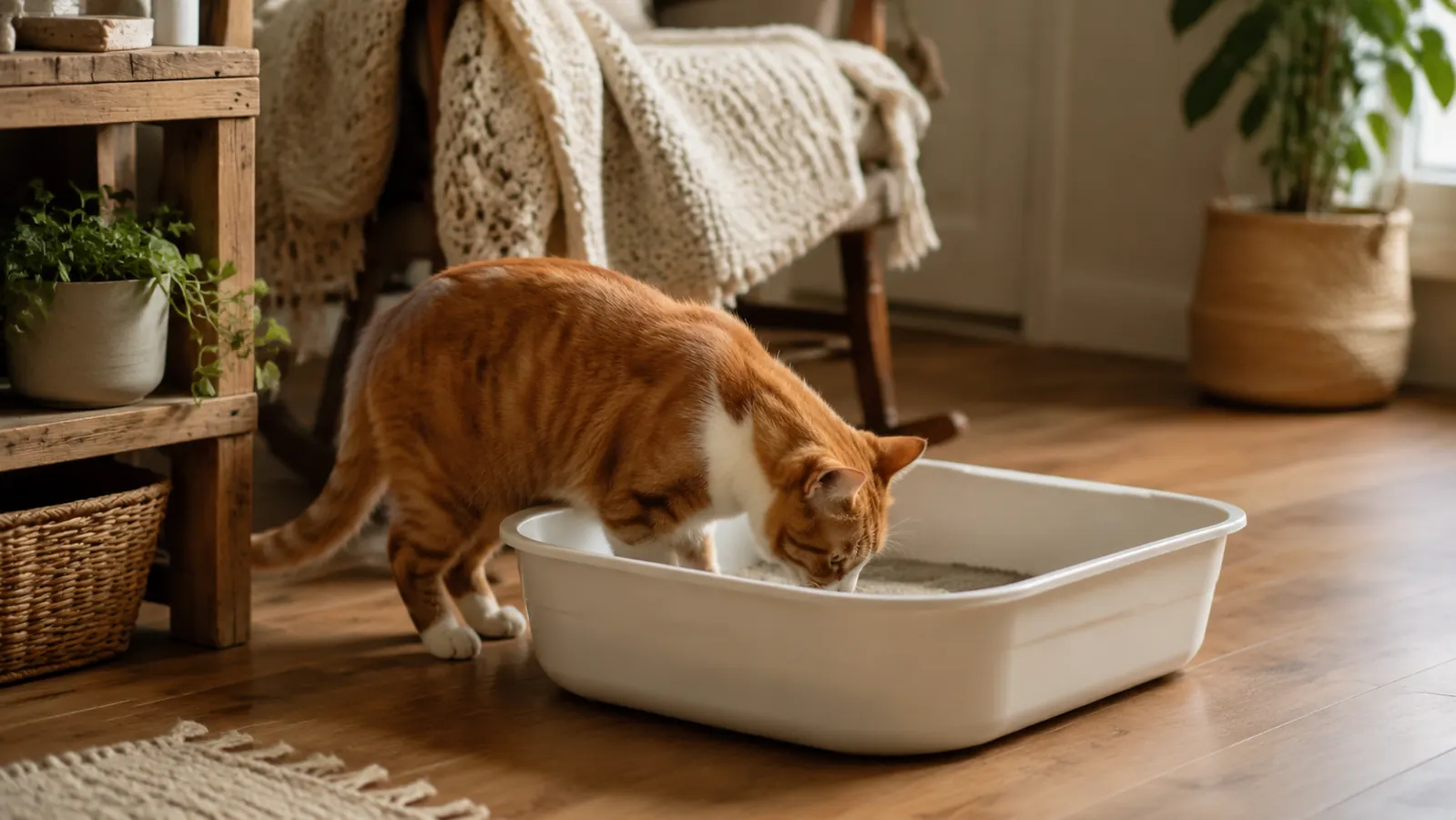
Some cats, especially older ones or those with any arthritis or joint sensitivity, find the pellets uncomfortable underfoot. Marigold, at nine years old with mild arthritis in her hind end, needed a slightly deeper base layer so the pellets were not rolling around under her feet. Adding a quarter-inch extra depth at the bottom solved this immediately. If your cat seems uncomfortable rather than just resistant, depth and box size are the first things to adjust before assuming the litter itself is the problem.
Also keep an eye out for any avoidance that looks medical rather than behavioral. Cats that are straining, crying in the box, or making more frequent but smaller visits may have a urinary issue that has nothing to do with the litter change. Do not let a transition obscure a health signal. If anything looks off medically, pause the transition and call your vet.
Step 5: Week Five, Full Switch and Maintenance Mode
Clean the box completely and fill with 100% Feline Pine Platinum. Add enough pellets to give a solid two-to-three inch base layer. For a sifting system, that means enough pellets in the top tray that the cat has comfortable footing without feeling like they are walking on scattered pebbles. For a flat open box, a two-inch base works well for most cats.
Ongoing maintenance with pine pellets is simpler than clay in most respects. You scoop solids daily. Every four to seven days, depending on how many cats use the box, you will empty the entire bottom tray of sawdust and add fresh pellets to replace the ones that broke down. With two cats in my house, I do a full tray dump and refresh every five days. The total litter consumption per month is lower than clay was, which offsets the per-bag cost. Feline Pine Platinum at current pricing on Amazon runs around $22 for a 17-pound bag, and I go through roughly one bag per month for two cats with two boxes.
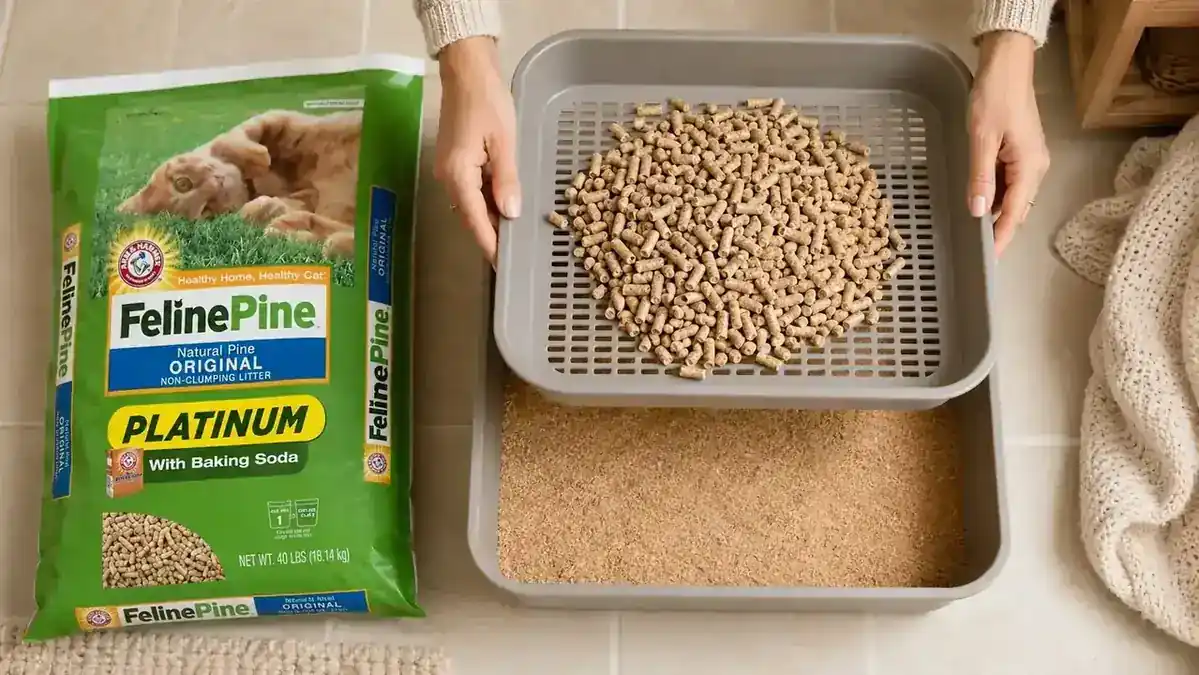
One maintenance note specific to the Platinum formula: it does break down more completely into fine sawdust than the original Feline Pine does. That is a feature, not a problem, but it means you should empty the bottom tray more frequently than you might expect coming from other pine litters. If you let the sawdust accumulate past capacity, it can back up and get mixed into the clean pellet layer above. A quick every-five-days check prevents this entirely.
What Else Helps During the Transition
A few smaller things made a real difference for us. First, keep the box location identical during the entire transition. Moving the box at the same time as changing the litter is too many variables at once. Second, avoid scented cleaning products when washing the box between refills. Cats use scent to identify their bathroom location, and a strongly perfumed cleaner can make a familiar box feel like an unfamiliar one. Plain hot water and a small amount of unscented dish soap is all you need. Third, if you have a multi-cat household, run each cat through the transition at roughly the same pace. One box at 100% clay while another is at 50/50 creates confusion and can lead to box-sharing disputes that would not otherwise happen.
For particularly resistant cats, some owners have success adding a small amount of used litter from the old box to the new pine mix during the early weeks. The familiar scent gives the cat enough of a signal that yes, this is still their bathroom. I did not need to do this with Marigold or Pip, but it is a well-documented tactic worth trying if you hit a wall at any point in the process.
Finally, if your cat has any history of litter box avoidance, house soiling, or anxiety, talk to your vet before starting a litter transition. Some cats need additional behavioral support during changes, and there are products, both pheromone-based sprays and short-term supplements, that can reduce transition stress without medication. A low-stress transition is a successful one.
Ready to start week one? Feline Pine Platinum is in stock on Amazon with over 10,000 reviews backing it up.
Feline Pine Platinum Non-Clumping Cat Litter, 17lb has a 4.3-star rating across more than 10,000 purchases. It is made by Arm and Hammer, uses natural pine odor control, and produces almost no airborne dust. If you set up Subscribe and Save, you save an additional percentage and never have to think about reordering. Check today's price before you start week one.
Amazon Check Today's Price on Amazon →