
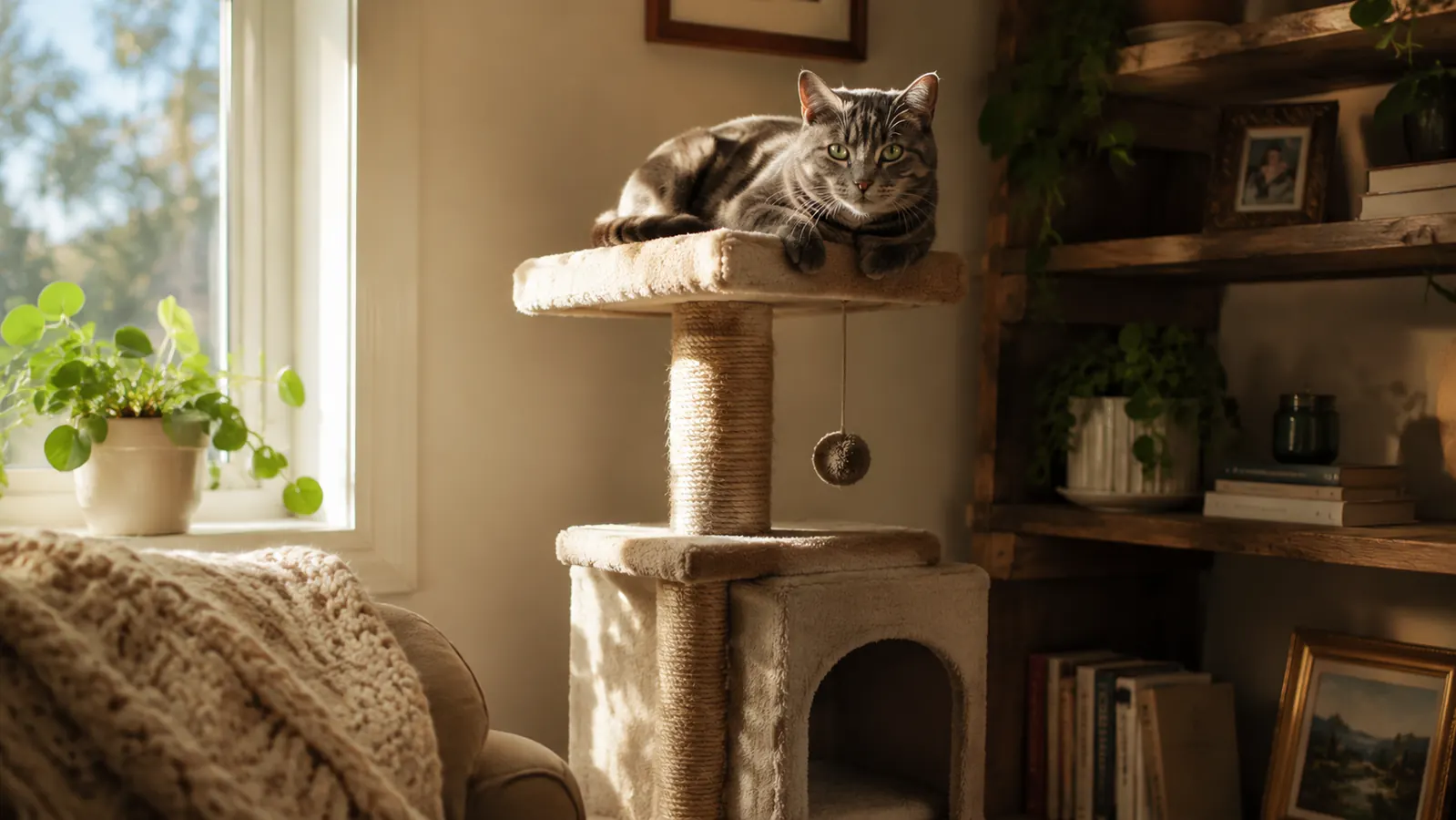
I have bought three cat trees in the past six years. The first two spent months collecting dust in the corner while Marigold and Pip kept scratching my couch cushions and sleeping on top of the cable box. I started to think the problem was my cats. It was not. The problem was that I kept setting the trees up wrong and expecting the cats to figure it out on their own. Once I understood the actual reasons a cat ignores a new structure, the process became completely fixable. This guide walks through what I learned, step by step, using the Yaheetech 82.5-inch cat tree I picked up last spring. It is now the most-used piece of furniture in the house.
A quick note before we start: cats are not stubborn for the sake of it. When a cat ignores a new object, it is almost always about unfamiliar scent, a bad location, or not enough positive reinforcement to make the climb feel worth it. Fix those three things and most cats come around within two weeks. The steps below handle all three.
The tree I used for all five steps below: Yaheetech 82.5-inch cat tree.
It is stable enough for a cat who likes to launch herself from the top, has a hammock Pip discovered on day three, and the sisal posts have held up to fourteen months of serious scratching. At its current price it is one of the better-built tall towers you will find without spending twice as much.
Amazon Check Today's Price on Amazon →Why Most Cats Ignore a New Cat Tree
Before jumping to the steps, it helps to understand the core issue. A new cat tree smells like a warehouse, a factory, or the back of a delivery truck. From a cat's perspective, that is a foreign object in their territory. Cats explore new things cautiously because their survival instincts have not gotten the memo that they live in a climate-controlled apartment and the biggest threat is a closed bathroom door. Add to that the fact that cats choose resting spots based on safety, warmth, and sightlines, and you start to see why just plopping a tree in the corner does not work.
The good news: all of these are solvable. You just have to make the tree smell familiar, put it somewhere a cat would actually want to be, and give them a reason to get on it the first time. After that, habit takes over.
Step 1: Choose the Right Spot Before You Assemble
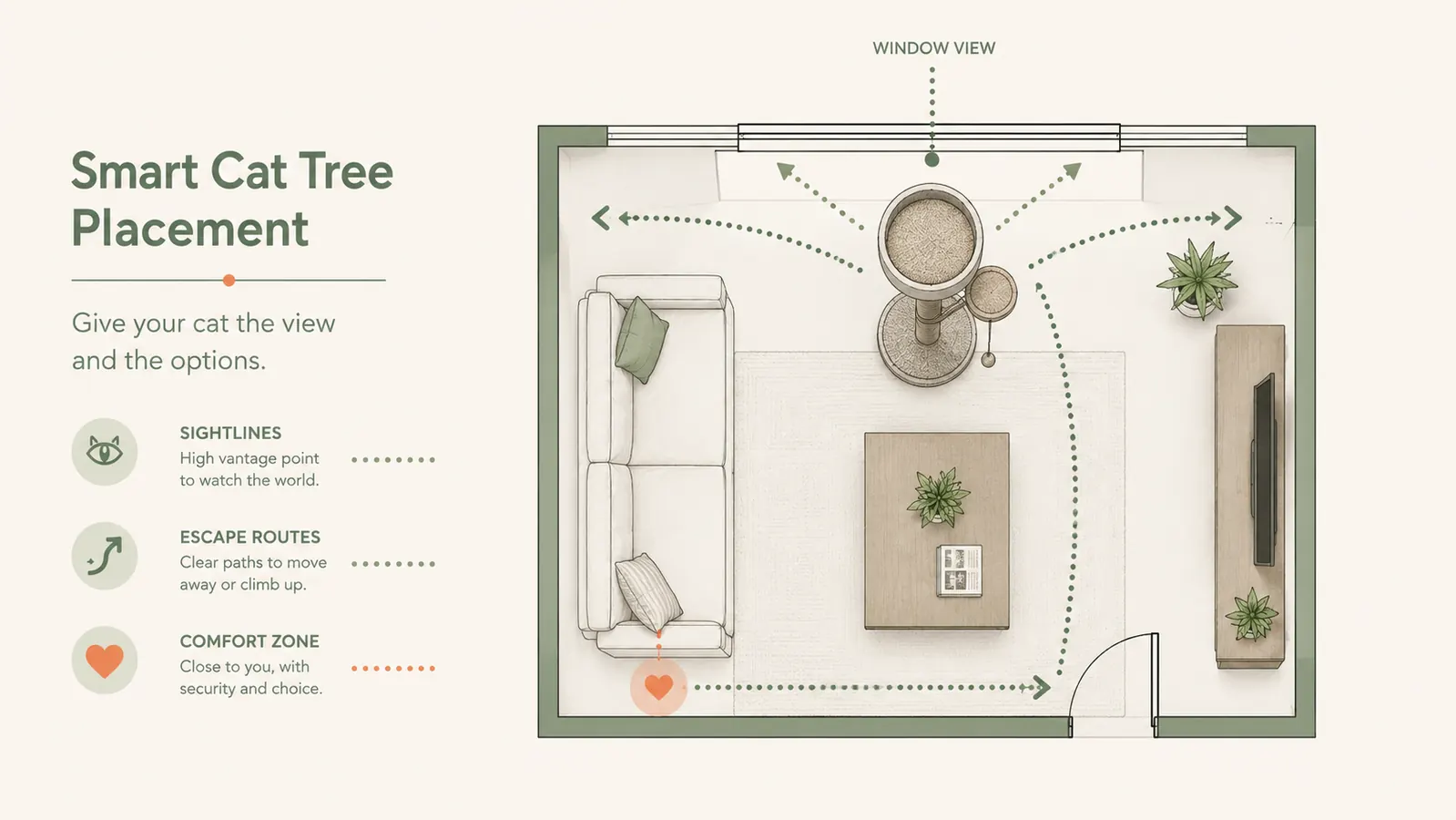
Location is the single biggest factor that determines whether a cat uses a tree. Most people choose based on what looks good for the room. Cats do not care about your interior design. They care about three things: a clear sightline to the rest of the room, proximity to a window, and an escape route if something startles them. The corner of a room sounds logical but it is actually one of the worst placements. Cats feel trapped there because there is no way out except back through the room.
I moved my Yaheetech tree three times before I got it right. The spot that worked was against a side wall in the living room, about four feet from the front window, with the tree angled so Marigold could see both the window and the hallway from the top perch. Within 48 hours of that move she was up there on her own. The sightlines matter more than you think. Put the tree where your cat already spends time watching the room, not where it is convenient for you.
If your cat has a favorite chair or windowsill, start the tree within a few feet of that spot. You are not trying to compete with their existing preferred perch; you are offering an upgrade that is right next to it. The 82.5-inch Yaheetech works well near windows because the top platform actually clears most standard windowsill heights, so the cat can look out without craning their neck.
Step 2: Deal with the New-Scent Problem First
Once the tree is assembled and placed, do not expect your cat to investigate immediately. Give it 24 hours and spend that time scent-loading it. The fastest way to do this: take a worn piece of your clothing (a t-shirt you slept in works well) and drape it over the top platform or stuff it inside the condo. Your scent signals to the cat that this object is already part of the household, not an intruder.
The second step is to rub your cat's cheeks against the posts and platforms. Cats have scent glands on their cheeks and when they rub against something they are marking it as theirs. If your cat is comfortable being picked up, hold them near a post and let them headbutt it on their own terms. Do not force the contact. You are just positioning them close enough that the natural curiosity kicks in. With Pip, I would hold him near the base of the tree while I scratched behind his ears, and he would eventually start rubbing his face on the sisal post on his own.
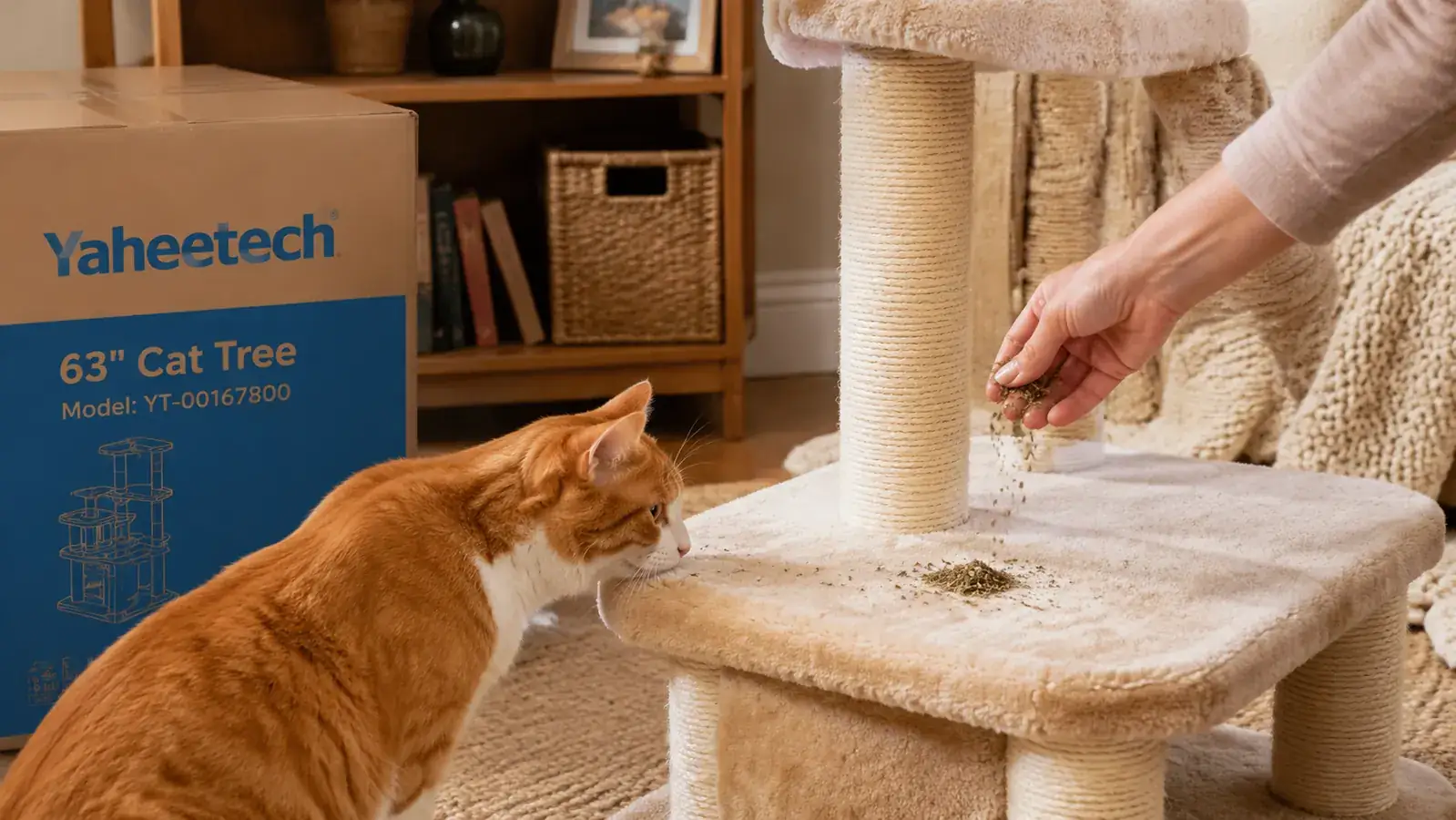
Catnip helps here too, but save the heavy application for Step 4. For now, a light rub of dried catnip on the base posts is enough to create a scent anchor without overwhelming the cat into an overstimulated frenzy and an unhelpful association.
Step 3: Make the First Climb Happen with Treats and Play
Your cat is not going to climb a six-foot tower the first day. You are not aiming for that. You are aiming for one paw on the lowest platform, rewarded immediately. This is where high-value treats come in. I used freeze-dried chicken for both Marigold and Pip. The principle is simple: put a treat on the lowest platform while the cat is watching you do it. Most cats will approach within a few seconds out of pure food motivation. The moment a paw touches the platform, praise quietly and let them eat the treat. Repeat this three or four times across the first two days.
Wand toys are your other tool here. A feather wand dragged slowly up the levels of the tree is the fastest way I have found to get a cat physically onto multiple levels in one session. The key is to move the wand up one level at a time, pausing to let the cat catch it on each platform before moving it higher. Do not yank the toy straight to the top; that just frustrates them. The Yaheetech tree has enough intermediate platforms and hammock positions that you can create a logical wand-play path from ground level to the top in about five or six moves.
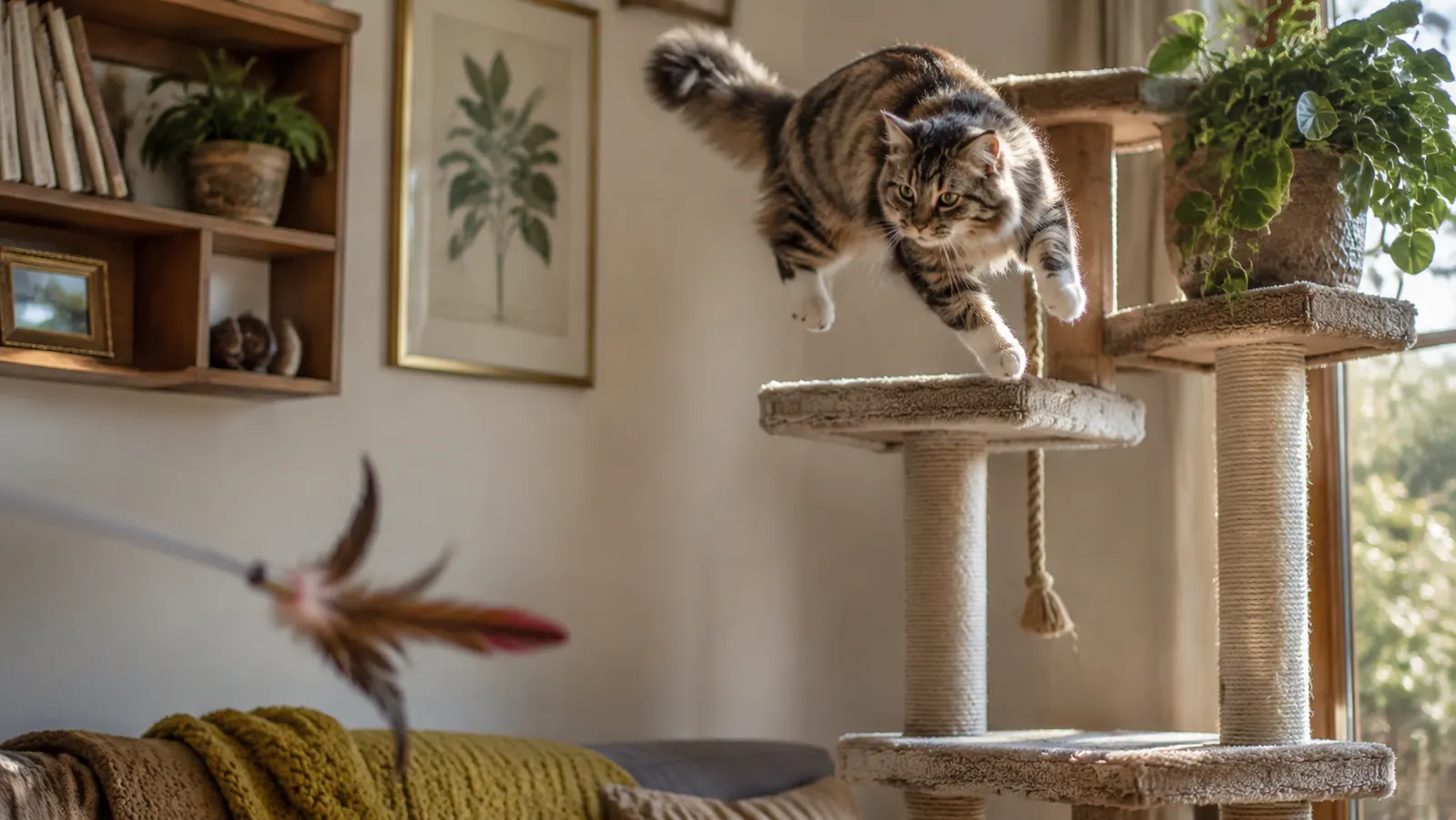
The moment I stopped expecting the cats to figure it out on their own and started treating the tree like a new skill to teach, everything changed. Three days of treat placement and wand sessions and Pip was sleeping in the hammock by himself.
Step 4: Reinforce the Scratching Posts Specifically
One of the underrated problems with getting cats to use a tree is that they may love the platforms but ignore the scratching posts, which means they keep going back to your furniture. Scratching is territorial behavior as much as it is physical maintenance. Cats scratch to leave visual and scent marks. If the posts on the tree do not smell like the cat, they have no reason to prefer them over the arm of your sofa.
Here is where catnip gets more aggressive use. Rub dried catnip directly into the sisal on the main vertical posts. Not just a sprinkle: actually press it in with your fingers so it gets embedded in the texture. This works because the catnip stimulates the cat into a rolling, rubbing response that deposits their scent all over the post surface. After a few catnip sessions on the post, they start treating it as their territory and will return to scratch it even without the catnip present. This took about five days with Marigold, who is a slower mover than Pip.
You can also redirect scratching behavior by placing the tree in front of the piece of furniture they currently prefer. I temporarily moved the tree to block the corner of the sectional where Pip liked to scratch. He was annoyed about it but the sisal post was right there, he used it, and after two weeks I moved the tree to its permanent spot. He followed the scent.
Step 5: Give It Two Full Weeks Before Reassessing
Most of the advice I have seen online says cats will start using a tree within a day or two. In my experience, that is true for confident, outgoing cats. For cats like Marigold, who took six months to accept a new water fountain, two weeks is a more realistic minimum. If you have reached day ten and the cat has used every level at least once, you are winning even if it does not feel that way. Habit formation takes time.
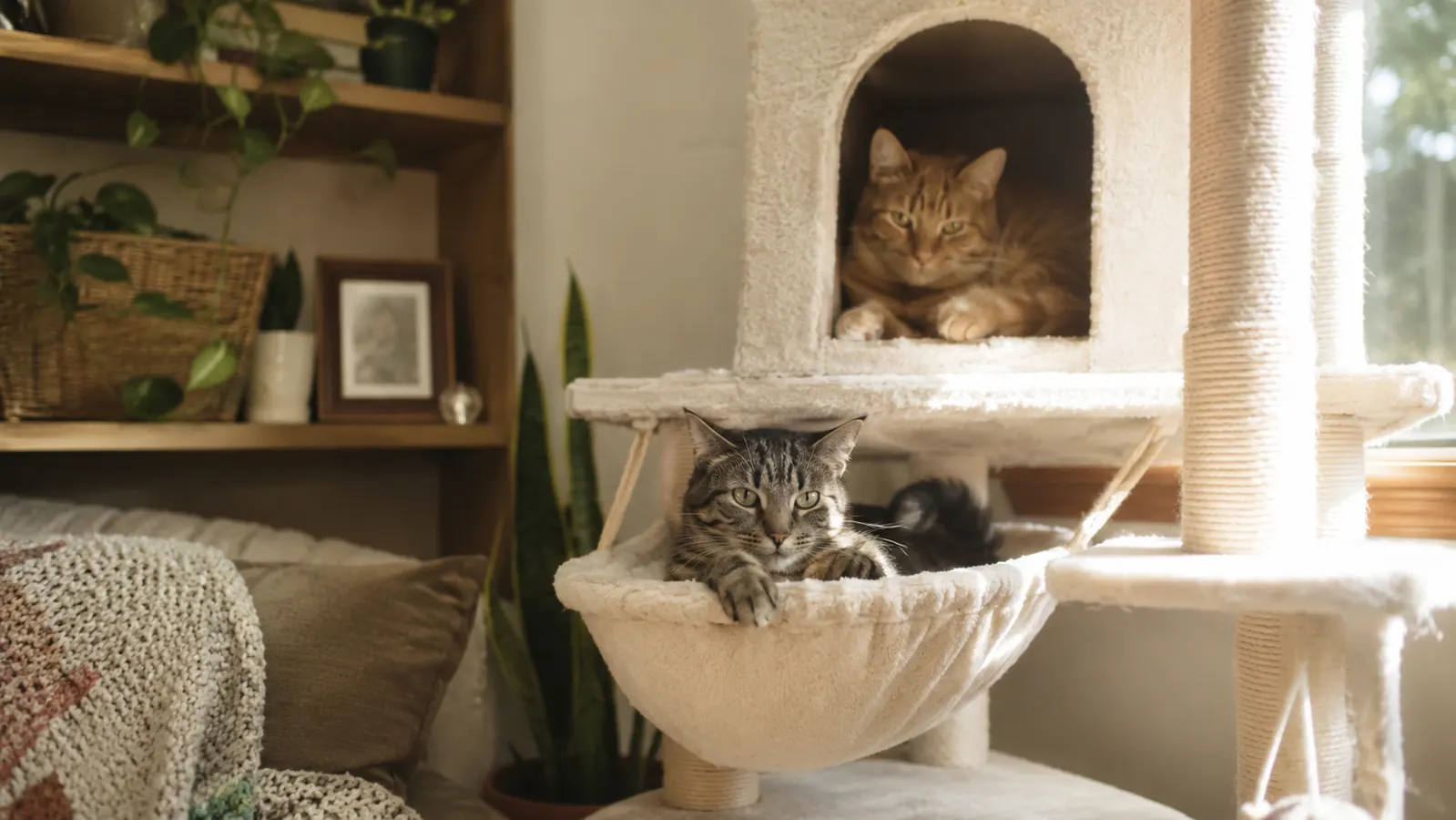
What to look for by the end of week two: the cat voluntarily goes to the tree without you prompting them, they scratch the sisal posts without catnip encouragement, and they choose to nap on at least one platform without being lured there with treats. If all three of those are happening, the tree is adopted. If none of them are happening after two weeks, revisit the location. In my experience, an ignored tree is almost always a location problem rather than a cat problem. Try moving it three feet in a different direction toward the window or toward the cat's current favorite spot.
One more thing: if you have multiple cats, it helps to introduce each cat to the tree separately before letting them compete for it. I gave Marigold solo access to the tree for the first four days before Pip got unsupervised time with it. That way she had time to scent-mark it as hers, which gave her confidence on it. Pip, being younger and bolder, adopted it faster once he could smell that Marigold had been there. The Yaheetech 82.5-inch tree has enough distinct levels, a hammock, two condos, and a top perch that both cats can be on it simultaneously without conflict, which matters in a multi-cat house.
What Else Helps
Feliway spray applied to the base of the tree on day one can help anxious cats approach it faster. It is a synthetic version of the calming facial pheromone cats naturally deposit when they headbutt something. I do not use it every time but for Marigold, who gets nervous about new objects, one application on day one made a noticeable difference in how quickly she started sniffing around the base. It is not required but it is a useful tool if your cat is particularly hesitant.
Feeding your cat their meals near the base of the tree for the first week also accelerates adoption. Food is the most reliable positive association you can create. Even if the cat never actually eats on the tree, associating meal time with the tree's presence makes the whole structure feel safe and positive. Start with the bowl three feet from the base and gradually move it closer over the first five days until you are placing it on the lowest platform.
The Yaheetech 82.5-inch tree has been through every step in this guide and held up well.
Stable base that does not wobble when a cat launches from the top, sisal that takes catnip embedding without falling apart, and enough level variety that multiple cats can use it at the same time without the whole thing becoming a conflict zone. If you are shopping for a tall tree that will actually get used, this one is worth a look at its current price.
Amazon Check Today's Price on Amazon →