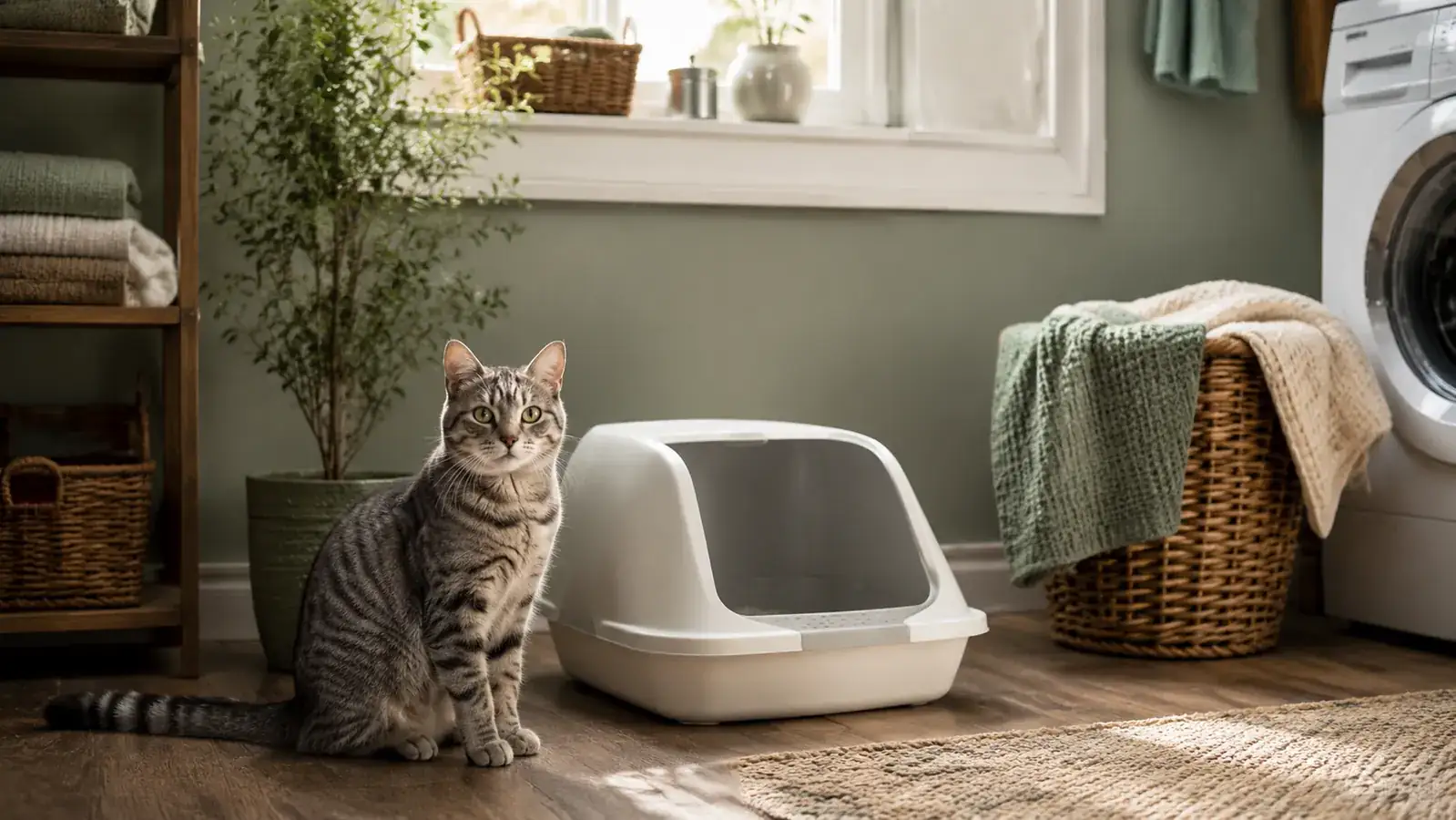
I had convinced myself the smell was just part of having cats. Two boxes, scooped every day, the clumping clay I had been buying on autopilot for years. It was not a full-on stench, just that low background ammonia that greeted me every time I walked down the hallway toward my laundry room. I told myself it was fine. Marigold and Pip seemed unbothered. And then I ended up in urgent care.
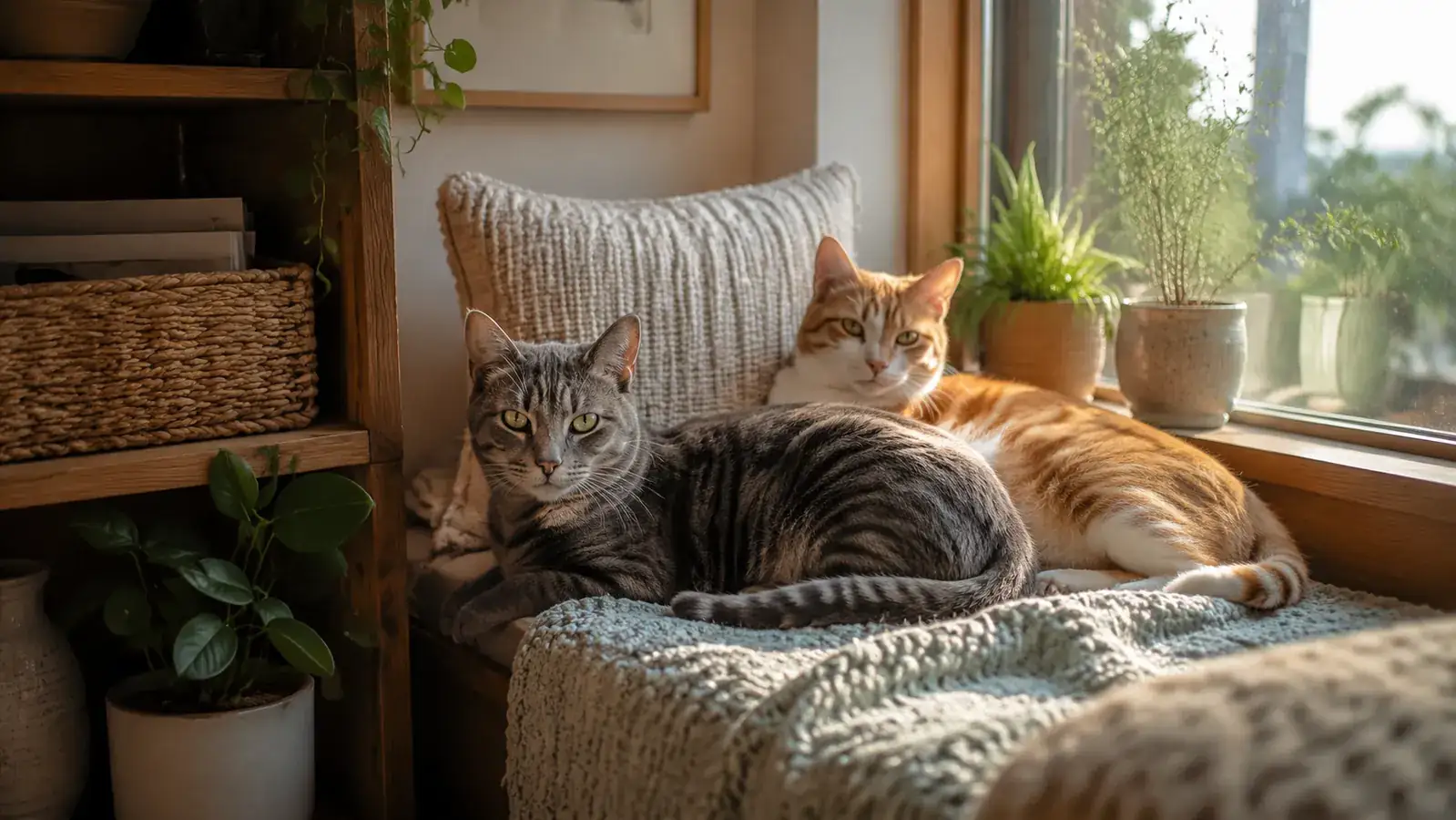
Not for the smell itself. For an asthma flare that my doctor traced, with a fair amount of confidence, back to the silica dust coming off my litter every time I poured a new bag or Marigold kicked her way out of the box like she was trying to set a record. She is 9, a gray tabby who treats the litter box like a renovation project. Pip, my 4-year-old orange tuxedo, is tidier about it but still managed to scatter half the box onto the floor three feet away on a regular basis. The dust hung in the air. I was breathing it. My airways were not impressed.
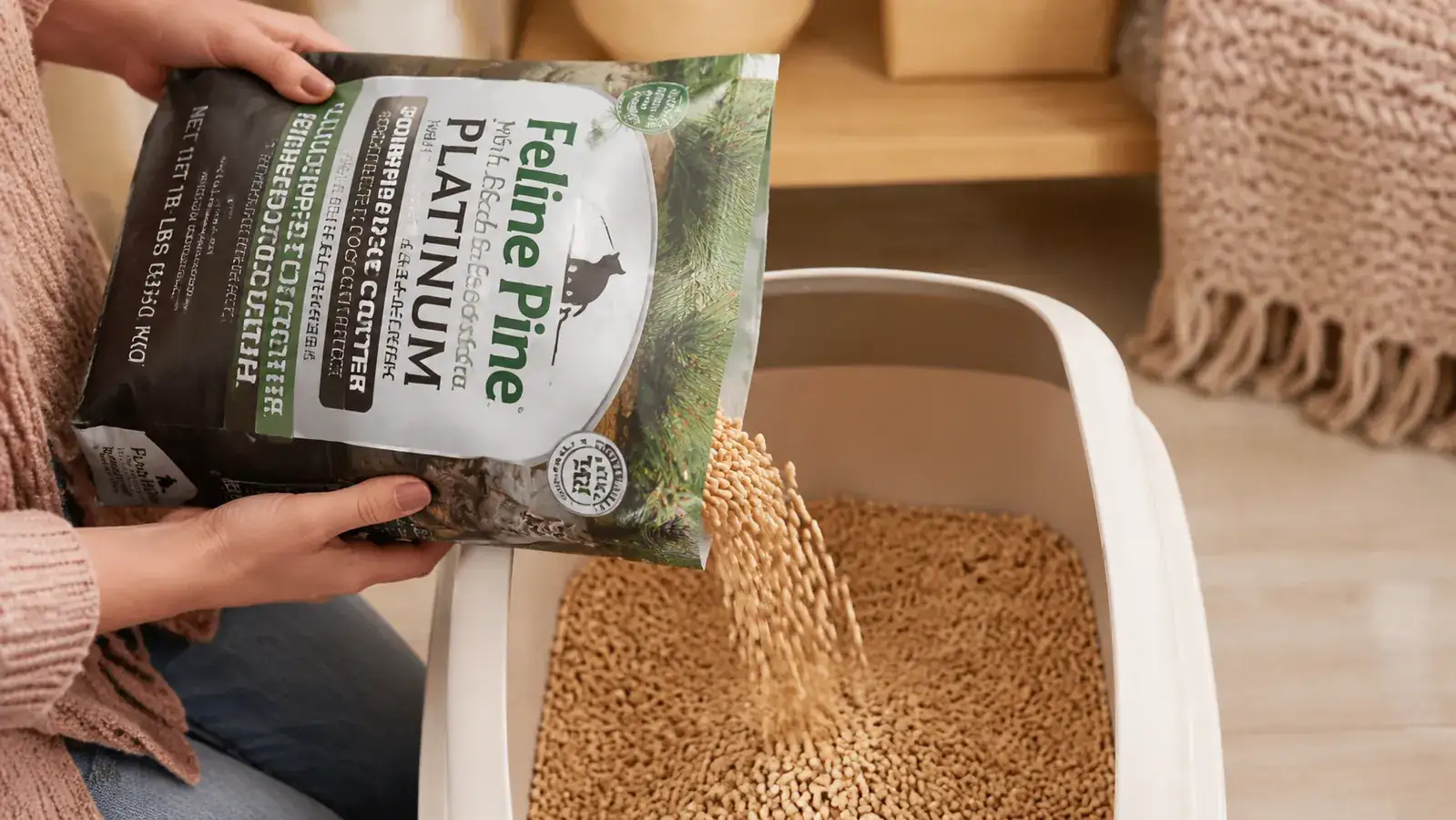
The doctor said reduce the dust exposure. I went home, looked at the fine print on my clay litter bag, and immediately felt foolish for not reading it sooner. That afternoon I started reading about alternatives. Wood-based litter came up in almost every thread. Specifically pine pellets, and specifically Feline Pine Platinum, which had tens of thousands of Amazon reviews and a rating I would not expect from something that smelled like a lumber yard. I ordered a 17-pound bag.
The dust hung in the air. I was breathing it. My airways were not impressed. Something had to change.
If litter dust is bothering you, it's worth trying what changed things for Marigold and Pip's box.
Feline Pine Platinum uses compressed pine pellets that control odor through natural wood absorption, no artificial fragrances, no silica dust cloud every time your cat digs. Over 10,000 reviewers have weighed in.
Amazon Check Today's Price on Amazon →I will be honest about the transition. Marigold took one look at the pellets, sat down two feet away from the box, and gave me a look I can only describe as administrative disappointment. She sniffed the edge of the box for two full minutes and then walked away. This lasted about four days. I mixed the pine pellets with a cup of the old clay at first, which smoothed things over. By the end of week one she was using it normally and by week two Pip had apparently decided it was his idea all along.
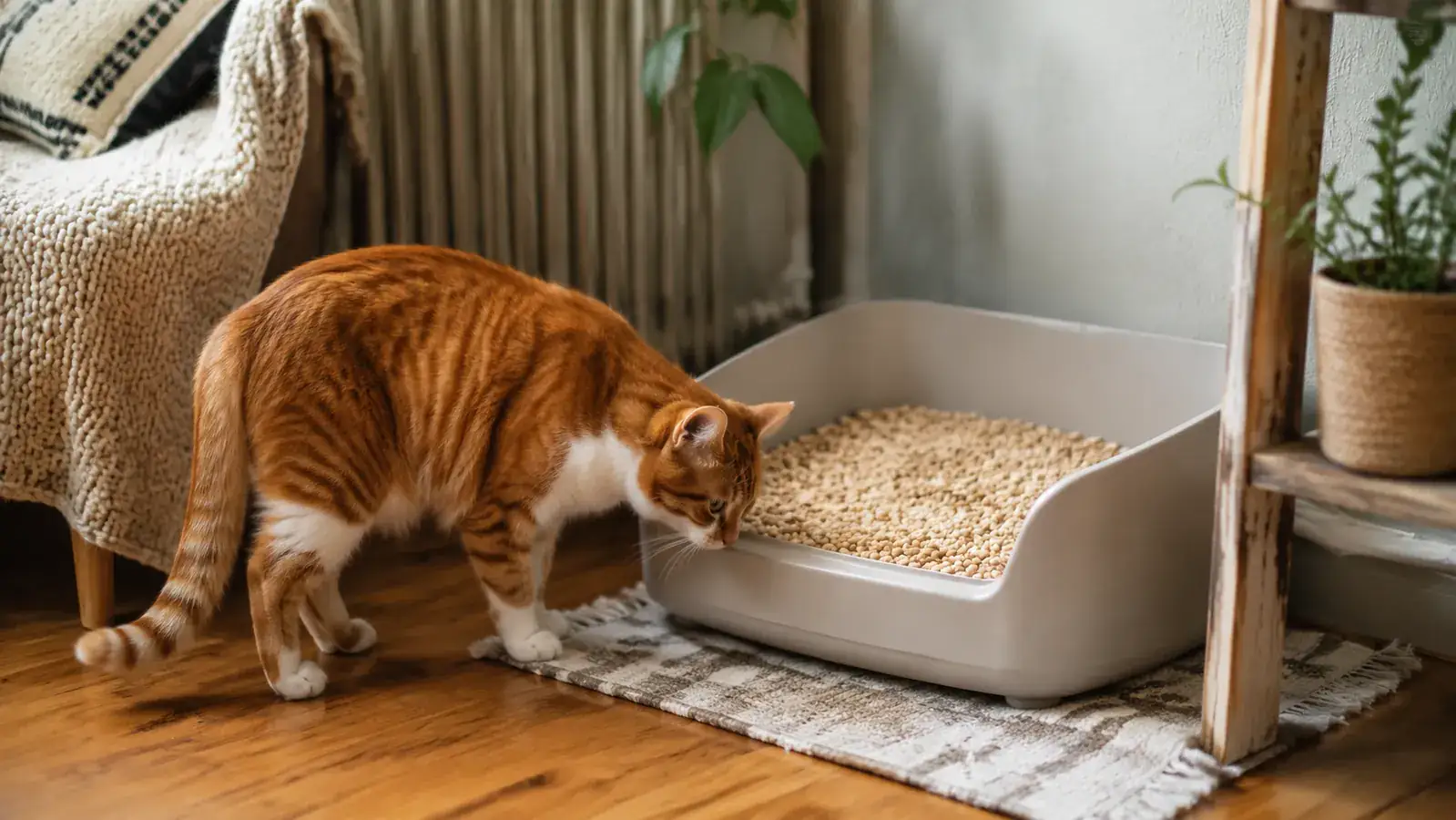
The smell change was not subtle. The ammonia smell that I had written off as permanent simply stopped. Pine has a natural scent, not a heavy perfume, just a clean woody note that fades once you're not standing directly over the box. What you do not smell is urine. The pellets absorb moisture and the ammonia odor along with it. When they are fully saturated they break down into sawdust, which settles to the bottom of the box. You scoop solid waste normally. For liquid, you either shake the box to let the sawdust fall through a sifting liner, or you scoop out the spent sawdust layer every few days. I use a basic sifting box I found at a hardware store and the whole process takes about ninety seconds.
Dust was the main reason I switched and that problem went away immediately. No cloud. No grit in the air. When Marigold does her post-use excavation routine, the pellets roll around a bit but they do not become airborne. I have not had a significant asthma flare since switching, and I am going on several months now. That is the part I care most about. The pellets do track, I should mention that. Not as badly as clay tracked for me, but a few pellets end up on the floor after every use. A small mat at the box entrance catches most of them.
The bag goes further than I expected too. Seventeen pounds of pellets sounds like a lot until you realize that you are not filling the entire box depth like you would with clay. Pellets work with a shallower fill, maybe two to three inches. My 17-pound bag lasted me close to six weeks for two cats. At the current price that runs cheaper per month than the mid-range clay I was buying before.
What I'd Tell You If We Were Sitting at My Kitchen Table
Here is what I would actually say if you asked me over coffee whether you should switch. If dust is not a problem for you and your cats are devoted to their current setup, there is no urgent reason to disrupt them. Cats are stubborn about litter and some of them will never accept pellets. Pip accepted them in a week; there are cats out there who would stage a protest for months.
But if you have any respiratory issues, if you have kids crawling on floors near litter tracking, if you are just tired of the ammonia smell that you have normalized over years of cat ownership, pine pellets are worth a serious look. The transition takes a little patience and a sifting liner makes the daily maintenance genuinely fast. I was skeptical. I am not skeptical anymore.
Feline Pine Platinum is not perfect. The sawdust tracking is real, the transition takes some cats longer than others, and if your cat absolutely refuses pellets you will end up mixing or backing off entirely. But the odor control is real, the dust reduction is real, and the fact that it is made from reclaimed wood rather than strip-mined clay is a nice bonus if that kind of thing matters to you. It matters to me, even if I did not lead with it. I switched for my lungs. I stayed for everything else.
Tired of the ammonia smell you've just accepted as normal? This is where I'd start.
Feline Pine Platinum is a 17-pound bag of compressed pine pellets with natural odor absorption and none of the silica dust. It is Arm and Hammer's Feline Pine line, rated 4.3 stars by over 10,500 buyers. The transition takes patience but most cat households that make the switch do not go back.
Amazon Check Today's Price on Amazon →