I want to start with the complaint you have probably already read in the Amazon reviews. "The pellets turn to sawdust and it goes everywhere." Three-star reviewer after three-star reviewer says the same thing, and when I first switched Marigold and Pip to Feline Pine Platinum about eight months ago, I made every mistake that leads to that exact outcome. So before I give you my full honest take on this litter, I need to explain why most of those complaints come from a setup problem, not a product defect. And then I need to tell you the parts that are actually frustrating regardless of how good your setup is.
This is not the same review as the one I wrote about long-term odor control and cost-per-month. That review covers how Feline Pine Platinum performs over time when everything is working well. This one is for the reader who has already read the glowing writeups and wants to know what nobody bothers to mention. Feline Pine Platinum (4.3 stars, over 10,000 reviews) is a genuinely good product. It is also a product that punishes you hard if you use it wrong.
Quick Verdict
A legitimate upgrade from clay litter, but it requires a sifting box and a realistic view of what 'non-clumping' means day-to-day. Get the setup right and you will keep it. Get it wrong and you will return it within two weeks.
Amazon Check Current Price on Amazon →Tired of clay dust coating every surface near your litter box? Feline Pine Platinum handles the odor differently.
Check the current price on Amazon before buying. Costs vary by bag size, and the 17lb option is almost always the best value per pound.
Amazon Check Today's Price on Amazon →What Nobody Explains About the Sawdust
Pine pellet litter works on a simple mechanism. The pellets are compressed pine that has had the phenols (the oils that are toxic to cats) removed during manufacturing. When the pellets get wet, they absorb the liquid and break down into fine sawdust. That sawdust is the used litter. The dry pellets sitting above it are still clean.
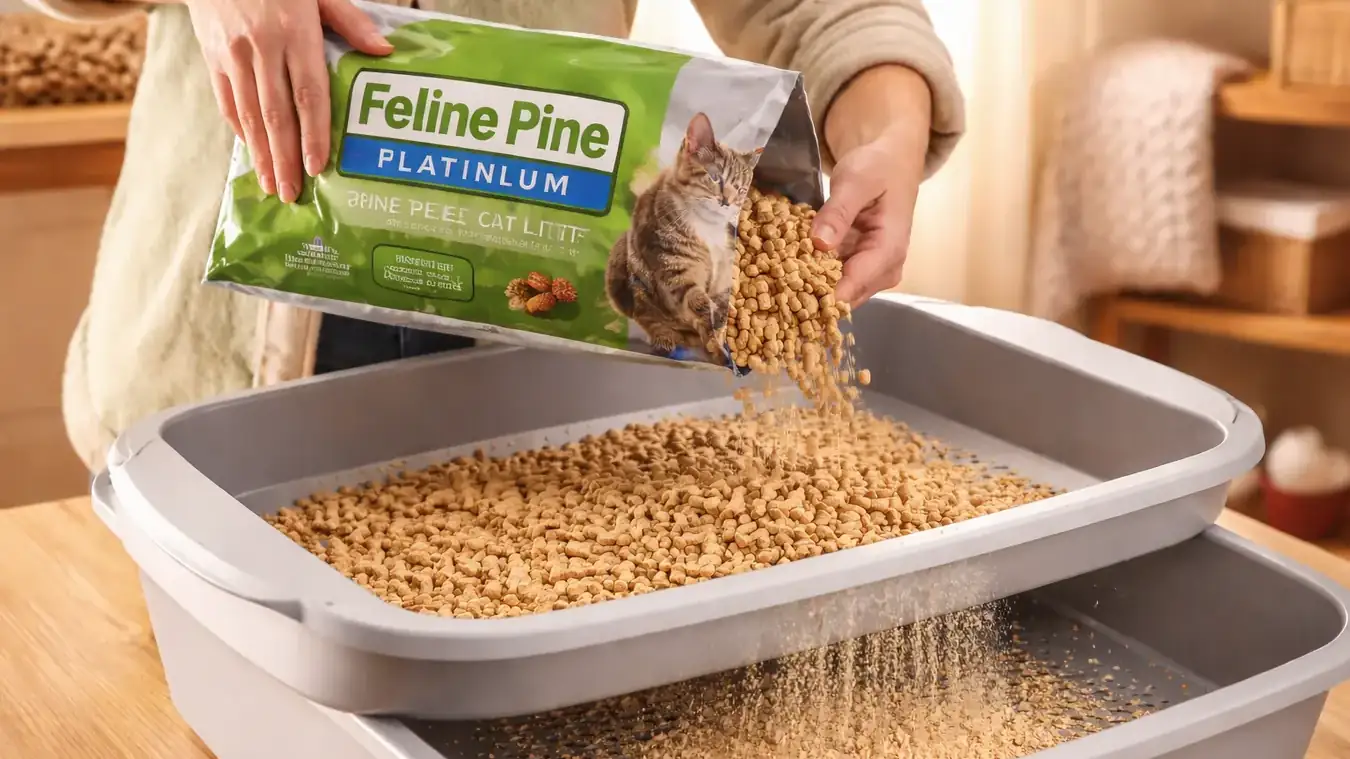
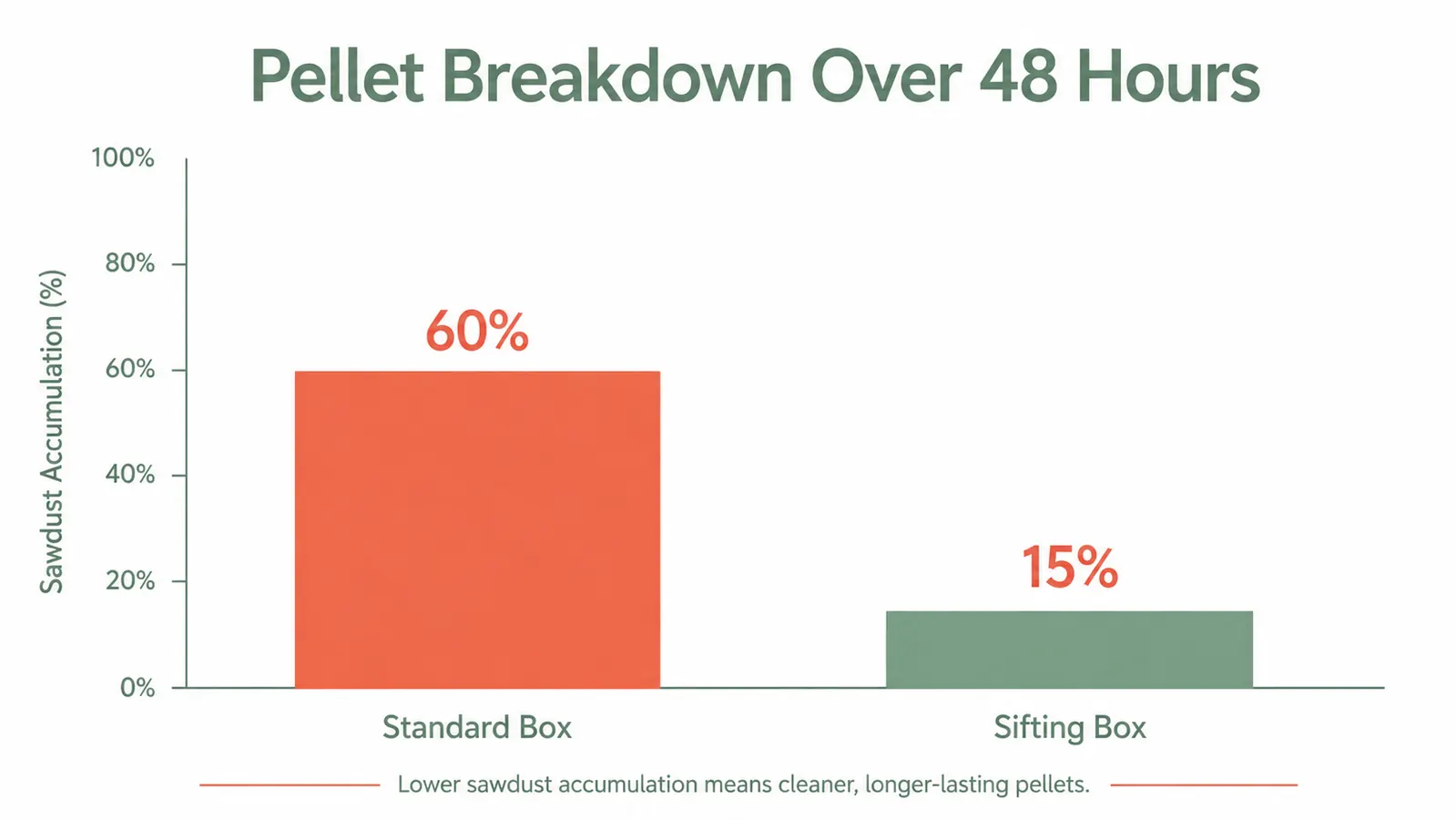
The problem is that a standard litter box treats clean pellets and dirty sawdust as the same thing. They pile together. The sawdust sticks to paws. Cats track it out. And when you go to scoop, you are scooping what looks like a box full of the litter equivalent of a failed project. That is what most frustrated reviewers experienced, and it is fixable with one purchase: a two-tray sifting box. The bottom tray catches the sawdust as it falls through the sieve. You scoop the solid waste from the top tray, pull the sieve out to let the fines drop, and the clean dry pellets stay on top. The whole system makes sense once you understand what the litter is actually doing.
I used a standard box for the first three weeks. I cannot fully explain why, because the sifting box instructions are literally on the Feline Pine website, but I was in a hurry and I thought the reviews were exaggerating. They were not. I switched to a dedicated pine pellet sifting box and the experience changed almost completely. Sawdust management went from a daily nuisance to a twice-weekly five-minute task.
The Complaints That Are Actually Valid
Now for the parts that are not setup errors. These are genuine product characteristics you should know about before you buy.
First: the pellets do not clump around solid waste. You scoop solids the normal way, but there is nothing to tell you exactly where a solid is versus a compressed pellet cluster, the way clumping clay gives you a tidy little monument to excavate. You learn to read the box differently. For most people this adjustment takes about two weeks. Pip figured it out faster than I did.
Second: the pine scent is real, and it is distinctive. It smells like a freshly opened bag of mulch. Most cat parents find this preferable to the synthetic lavender or baby powder that perfumed clays lean on. But it is not neutral. If you have someone in your household who is sensitive to strong wood scents, or who already finds cedar or pine overwhelming, test a small bag first. I like it. My partner thought the bathroom smelled like a lumberyard for about a week before the scent mellowed.
Third: multi-cat households use this litter faster than the bag implies. A 17-pound bag of clay clumping litter and a 17-pound bag of Feline Pine Platinum are not equivalent in terms of how long they last. The pellets are lower density and a larger portion of the bag weight is replaced as waste, rather than clumped and retained in the box. With Marigold and Pip sharing two boxes, I go through about one 17-pound bag every 18 days. That is not a complaint exactly, because the smell control justifies it, but budget accordingly.
The pellets turn to sawdust by design. That sawdust is the litter working. Understanding that one thing changes the whole experience.
The Box Setup Question: What Actually Works
I have tried three different setups since switching and I will save you the experimentation. A dedicated pine pellet sifting box with two trays and a sieve tray in between is the right answer. Not a standard box. Not a covered box without sifting capability. The covered boxes trap more pine scent than some cats tolerate, and they do not solve the sawdust management problem.
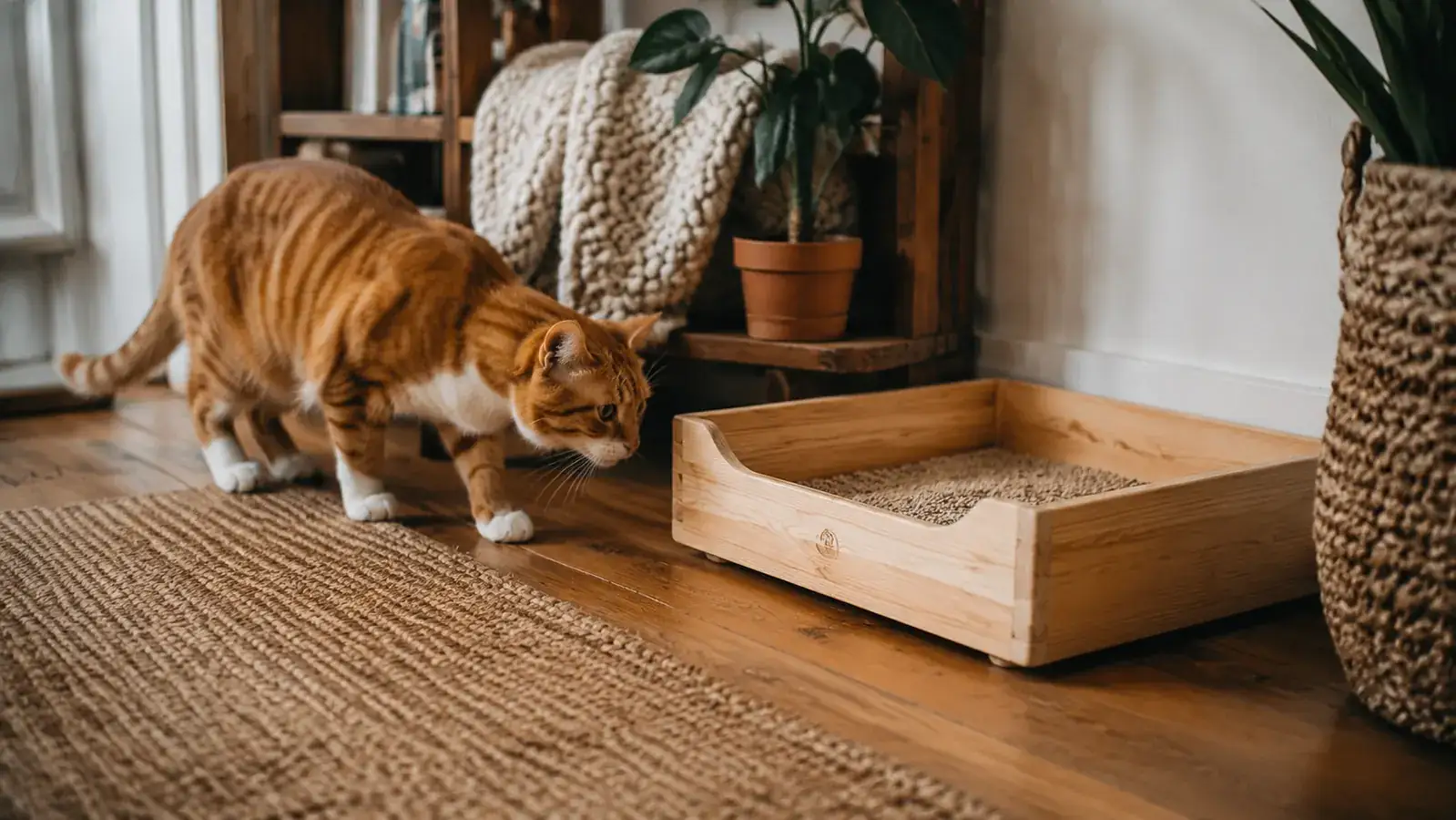
Marigold is nine and has strong opinions about enclosed spaces after her urinary crystal issues in 2024 meant multiple vet-supervised litter checks. She refused the hooded setup entirely, which is fine because the open sifting box works better anyway for pellet litter. Pip, at four, will use anything as long as it is not within five feet of his food. Standard young-cat logic.
The other thing that matters: fill depth. You only need about two to three inches of pellets. People coming from clay tend to fill deeper because clay requires depth for clumping. Pine pellets do not. They work at the surface. A deep fill just means more pellets breaking down before the top layer gets used, and more confusing sawdust accumulation. Shallow fill, clean sifting box, regular removal of the fines drawer. That is the entire system.
Odor Control: Where Feline Pine Actually Earns Its Keep
Here is where I stop being critical and start being genuinely impressed. The ammonia control in this litter is better than anything clay-based I have used in nine years of cat ownership. Ammonia is what makes a litter box smell like a litter box rather than a bathroom that humans also use. Clay litters trap urine in clumps but the ammonia still off-gasses. Feline Pine absorbs the urine, the pine fibers neutralize the ammonia, and the sawdust breakdown is physically sequestering the smell rather than just masking it.
My bathroom is small. Before switching, I cleaned the box daily and it still had a presence. Now I clean it every other day and guests who do not know I have cats sometimes miss the box entirely until they spot it. That is not a minor upgrade. That is a quality-of-life improvement for both me and anyone who walks into that bathroom.
The Platinum version specifically also includes baking soda as part of the odor-control system. It adds a second layer of odor neutralization on top of the pine's natural absorption. If you see plain Feline Pine (the original formula without the Platinum designation) and wonder whether the upgrade matters, in my experience with two cats the Platinum is worth the slight price difference for the added odor control in the sawdust phase.
Cat Acceptance: The Transition Problem Nobody Prepares You For
Cats are suspicious of litter changes. This is not unique to pine pellets, but the texture difference between clay clumping litter and pine pellets is larger than the difference between two different clay formulas, and some cats protest loudly. Marigold accepted it in about four days with a gradual mix. Pip made a point of sitting next to the box and staring at me for about a week before deciding the pellets were acceptable.
If your cat has ever refused a litter change before, do not cold-switch to pine pellets. Mix old litter and new pellets at a 3:1 ratio (old to new) for the first week, then 1:1 the second week, then phase the old out entirely. It takes patience but it avoids bathroom accidents, which are harder to clean up than the litter itself. I have a more detailed walkthrough of this process in my guide on transitioning cats to pine pellet litter, if you want a step-by-step plan.
Pros
- Ammonia odor control is genuinely superior to clay clumping formulas
- Natural pine ingredient list: no synthetic fragrances, no silica dust, no clumping agents
- Significantly less airborne dust than clay, noticeable improvement for respiratory-sensitive cats and people
- Baking soda in the Platinum formula adds a second odor-control layer during sawdust phase
- Tracking is lighter and easier to sweep than fine clay particles
- Works out cheaper per month than premium clay formulas once you get the usage rate right
Cons
- Requires a two-tray sifting box to function well. Using it in a standard box creates the sawdust complaints you see in reviews
- Distinctive pine scent. Not everyone finds it neutral
- Non-clumping system is a habit adjustment for cat parents used to clay
- Goes through slightly faster by volume than clumping clay in multi-cat homes
- Transition resistance in texture-opinionated cats requires patience
Who This Is For
Feline Pine Platinum is the right call if ammonia smell is your primary litter complaint, if you or anyone in your household has respiratory sensitivity to clay dust, or if you have already been looking at wood pellet litter as a category and want a well-established option with a large enough review base (over 10,000 Amazon reviews) to trust. It is also a good match for households with cats that have had urinary issues, because the lower-dust environment and natural ingredients reduce one potential irritant from the mix.
It is not ideal if you absolutely need a clumping litter for behavioral or medical monitoring reasons, if your cat has a strong texture preference for fine clay and has rejected different-textured litters before, or if you cannot add a sifting box to your setup for any reason. The product can technically be used in a standard box, but I would not recommend buying it without the sifting box in the plan.
Who Should Skip It
Skip Feline Pine Platinum if you are monitoring a cat's urine output or urine appearance for health reasons. Non-clumping pellet litter makes urine tracking almost impossible, which matters if you have a cat with kidney disease, diabetes, or a history of blockages. It is also not the right fit for anyone who will not or cannot do the gradual transition. And if the pine scent genuinely bothers you or someone in your household, there is no getting around it: the scent is part of how this product works.
For comparison, I looked hard at a few other pine and wood pellet options before settling on Feline Pine Platinum. The main alternative in this category is the original Feline Pine (non-Platinum), which works similarly but lacks the baking soda component. The cost difference is small and in my testing the Platinum held odor longer during the sawdust phase, so I would not go back to the base formula. Other wood pellet brands exist and some work well, but with over 10,000 reviews the Platinum version has the track record that matters when you are making a change this households-disrupting.
Get the litter right, then get the sifting box. Both are linked below.
Feline Pine Platinum 17lb is the size I buy. Check the current Amazon price before adding to cart. It fluctuates enough to matter.
Amazon Check Today's Price on Amazon →